The Dental Implant Recovery Timeline Nobody Tells You About

The first week, the first month, the first year — what implant recovery actually feels like, day by day, and what the warning signs are.

When patients ask "how long is the recovery?" they're usually asking two different questions. One: when can I go back to work? Two: when is my mouth fully healed? The first answer is days. The second is months. Both are reasonable.
This is the honest, day-by-day timeline based on what we see in our practice across hundreds of implant cases.
Day 0 — surgery day
You arrive in the morning. The implant placement itself, for a single tooth, takes 30–45 minutes of actual surgery. With anaesthesia setup, planning verification, and post-op review, you're in the chair for around 60–90 minutes total.
You leave with:
- A bite of folded gauze on the site
- Mild numbness for 2–4 hours from local anaesthesia
- A prescription (usually amoxicillin + ibuprofen + a chlorhexidine rinse)
- Written aftercare instructions
- A scheduled review in 7–10 days
You can drive yourself home for routine cases. For surgical-guide-assisted cases or sedation, bring someone.
Day 1 — the worst day, and it's not bad
Day 1 is the day people fear, and it's almost always over-feared. What you actually feel:
- Mild to moderate ache at the surgical site — most patients describe it as 3-4 out of 10
- Slight swelling of the cheek, peaking on day 2-3
- Possible bruising for some — we can't predict who, but it fades naturally
- Difficulty opening wide — your jaw muscles are sore from being held open
What helps:
- Take prescribed ibuprofen before the local anaesthesia wears off, not after
- Cold compress on the cheek — 15 minutes on, 15 off, for the first 24 hours
- Keep your head elevated when sleeping (extra pillow)
- Soft food — yoghurt, dal, mashed potato, scrambled egg, soup
- No mouth rinsing today, no spitting, no straws
Most patients work from home on day 1 if it's not a strenuous job.
Day 2-3 — peak swelling
This is when the cheek looks puffiest. It's normal, even when it looks alarming in the mirror. The swelling is your immune system mobilising; it doesn't reflect anything going wrong inside.
Continue cold compresses on day 2. Switch to warm compresses on day 3 to help disperse swelling.
You should be eating soft foods comfortably. The site itself shouldn't be painful at this stage — sore, yes; painful, no. If you're escalating in pain rather than de-escalating, call us.
Day 4-7 — back to normal life
By day 4, most patients return to office work, light exercise, and normal social activity. You can speak normally. You can smile (with the soft tissue still healing) without obvious tells.
You're still:
- Avoiding hard, crunchy, or sticky foods on the surgical side
- Avoiding aggressive brushing right at the site
- Doing gentle saltwater rinses 3-4 times a day
- Avoiding alcohol and smoking (smoking is genuinely the single biggest predictor of implant failure)
Day 7-10 — review and stitch removal
You come in. We check that the gum is closing well, take photos, remove non-dissolvable stitches (most of ours are dissolvable now, but some cases warrant traditional ones).
By this point, the wound itself is sealed. The implant is silently doing the slow work of integration underneath.
Week 2-4 — the quiet phase
Externally, your mouth looks completely normal. Internally, osseointegration is in early stages — bone cells are differentiating, attaching to the implant surface, and beginning to mineralise.
- You can eat normally on the non-surgical side
- Resume normal exercise
- Resume normal toothbrushing, gentle around the area
- You can fly, travel, work out
What you can't do yet:
- Bite hard directly on the implant site
- Skip the chlorhexidine rinses (continue 1-2 times a day until week 4)
Month 2-3 — integration takes hold
By the 8-week mark, the implant has roughly 50-60% of its eventual bone-to-implant contact. You don't feel anything. There's no external sign anything is happening. The implant is silent and sturdy.
For straightforward cases, this is when we start the prosthetic phase — taking impressions or scans for the abutment and crown. For cases that needed bone grafting, we wait longer (4-6 months total).
Month 3-6 — the crown and final loading
Most cases are ready for final loading at month 3-4 in the lower jaw and month 4-6 in the upper jaw (the upper jaw bone is softer and integrates more slowly).
Crown placement itself is anticlimactic — a 30-minute appointment, usually painless, no anaesthesia needed. You walk out chewing on it. It feels like a tooth from day one, though most patients say it takes 1-2 weeks before they stop being conscious of it.
Month 6-12 — the maturation phase
The implant continues to mature for the full first year. Bone remodels around the threads. The gum tissue settles into its final contour. There's typically a small amount of bone loss in the first year (about 0.5 mm) which is expected and stable thereafter.
Annual professional cleaning becomes critical. Implants don't get cavities, but they can develop peri-implantitis — gum inflammation around the implant — which is the long-term threat.
Year 1+ — for the rest of your life
A well-placed, well-maintained implant has a 95-98% 10-year survival rate in the literature. Most last decades. The crown on top is the part that may need replacement at the 10-15 year mark.
Maintenance:
- Brush around the implant just like a natural tooth
- Floss or use interdental brushes daily
- Professional cleaning every 6 months (we use special non-metal scalers for implants)
- Annual X-ray to monitor bone levels
- Treat any gum inflammation early — this is the single thing that destroys long-term implant prognosis
Warning signs — when to call us
Most recoveries are uneventful. But call us same-day if:
- Pain increasing rather than decreasing after day 4
- Swelling increasing rather than decreasing after day 4
- Heavy bleeding that doesn't stop with 30 minutes of pressure
- Fever above 100.4°F (38°C)
- Numbness in the lip or chin that hasn't resolved by day 3
- Yellow or green discharge from the site
- The implant feels mobile (very rare; never normal)
Frequently asked questions
Can I drink alcohol after surgery?
Avoid for at least 72 hours. It interferes with the early clot formation and with the antibiotics.
When can I smoke?
Honestly, never if you can manage it — smokers have roughly double the implant failure rate. At minimum, avoid for 6 weeks post-op. Better yet, use the surgery as the trigger to quit.
Why is upper jaw recovery longer?
The upper jaw has softer, more porous bone. The mineralisation process simply takes longer.
Do I have to take time off work?
For a single implant: 1-2 days for desk work. 4-7 days for physical labour. For multiple implants or full-arch cases: typically 1 week minimum.
Can I exercise?
Light walking from day 1. Cardio from day 4-5. Heavy lifting and strenuous activity from week 2.
If you have questions specific to your case or you're already in recovery and uncertain about something you're feeling, reach out — we'd rather hear from you and tell you it's normal than have you worry alone.
Free 15-minute consultation. We'll review your specific case and walk you through your options — no pressure, no upselling.
Treatments mentioned in this article
More from the Blog
All 23 articles →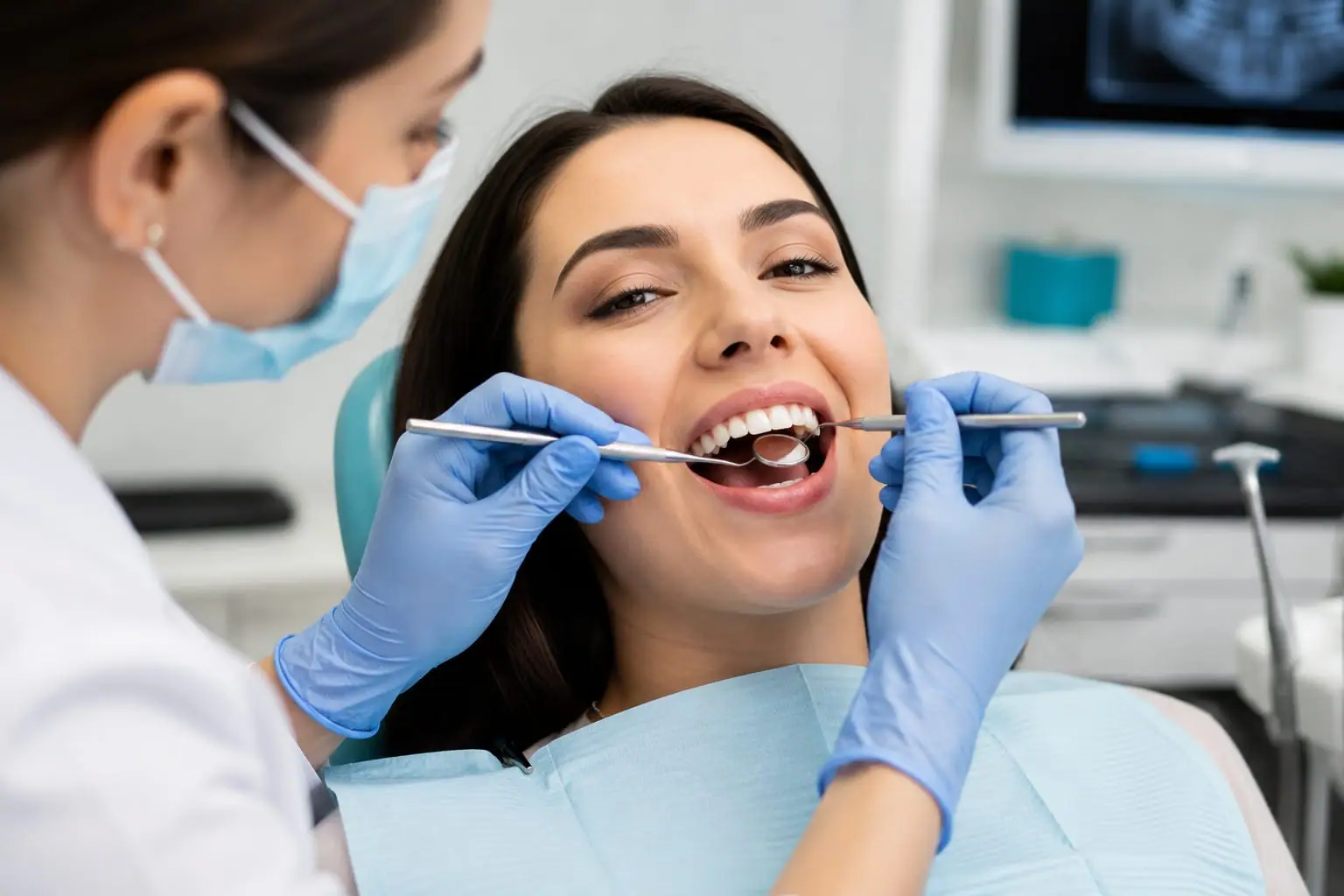
Why Regular Dental Check-ups Are Essential for a Healthy Smile
Regular dental check-ups help prevent cavities, gum disease, and costly treatments. Learn why visiting your dentist every six months matters.
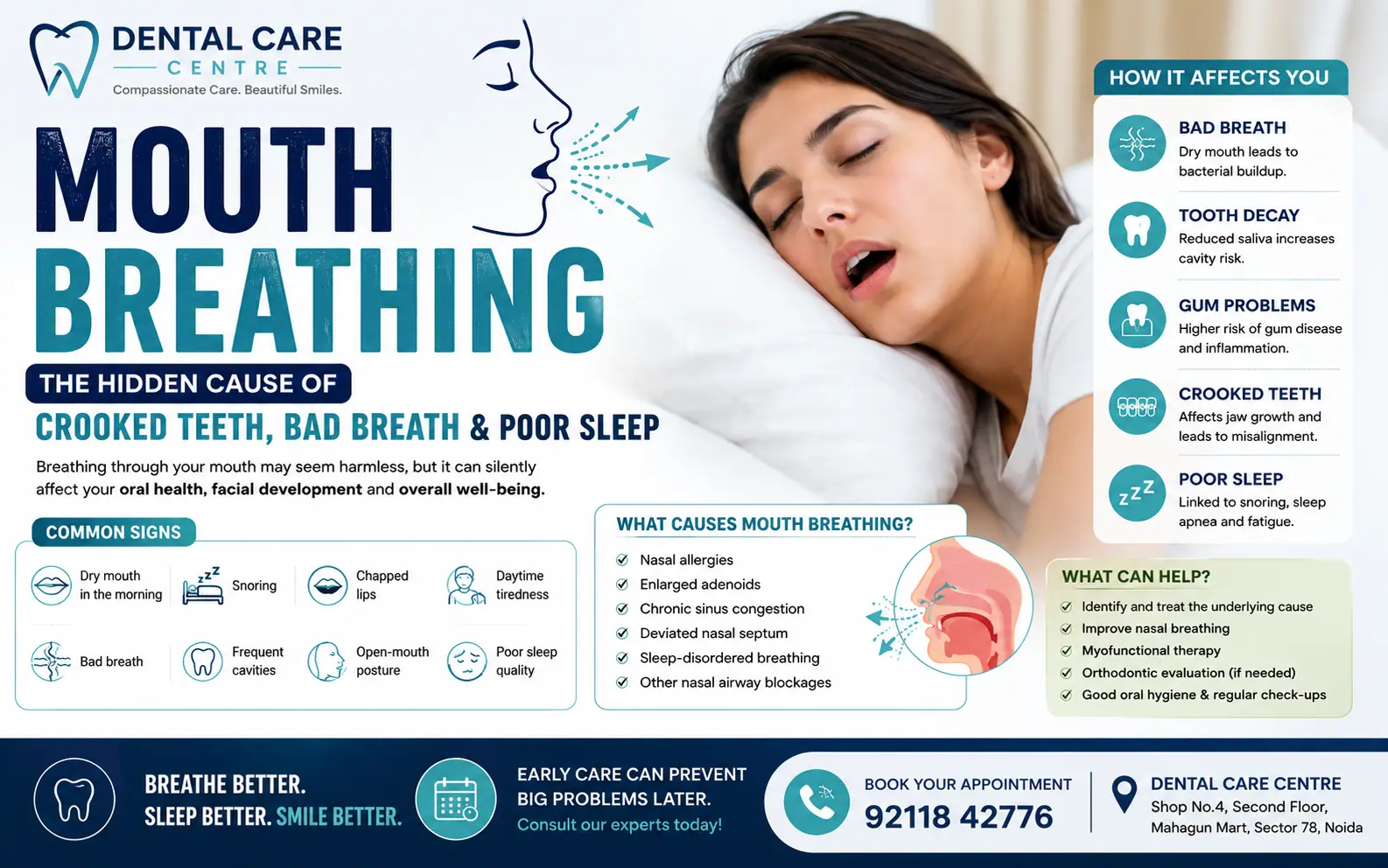
Mouth Breathing: The Hidden Cause of Crooked Teeth, Bad Breath & Poor Sleep
Mouth breathing can affect more than just your sleep. Learn how it contributes to bad breath, gum disease, crooked teeth, and facial development—and what you can do about it.
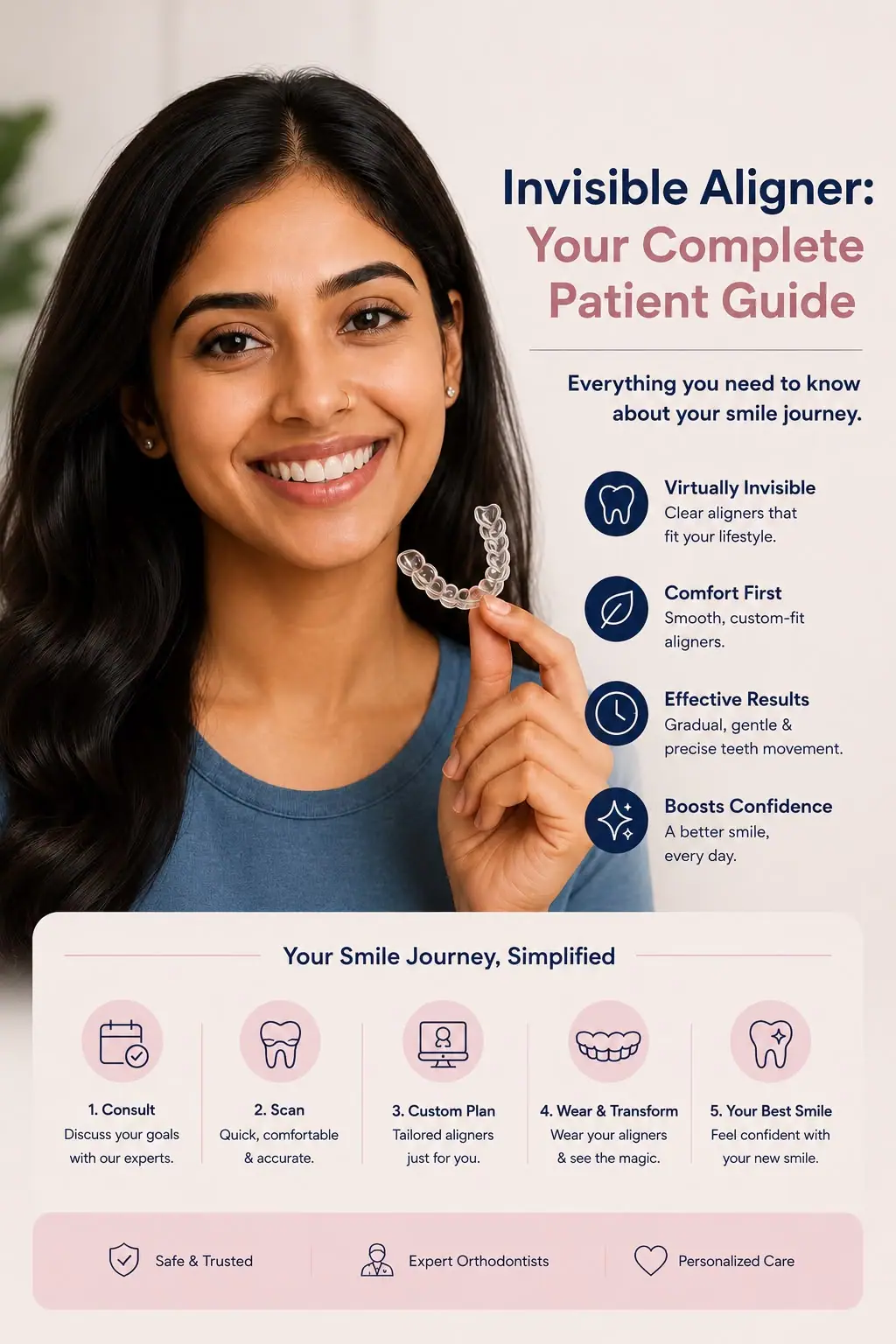
Invisible Aligners: Your Complete Patient Guide
Everything you need to know about invisible aligners — how they work, who qualifies, what treatment involves, costs, and how to choose the right clinic.