Knocked Out a Tooth? Your Emergency Dental Guide

A knocked out tooth is a true dental emergency. Learn the exact first-aid steps to take in the first hour — and why speed makes all the difference.
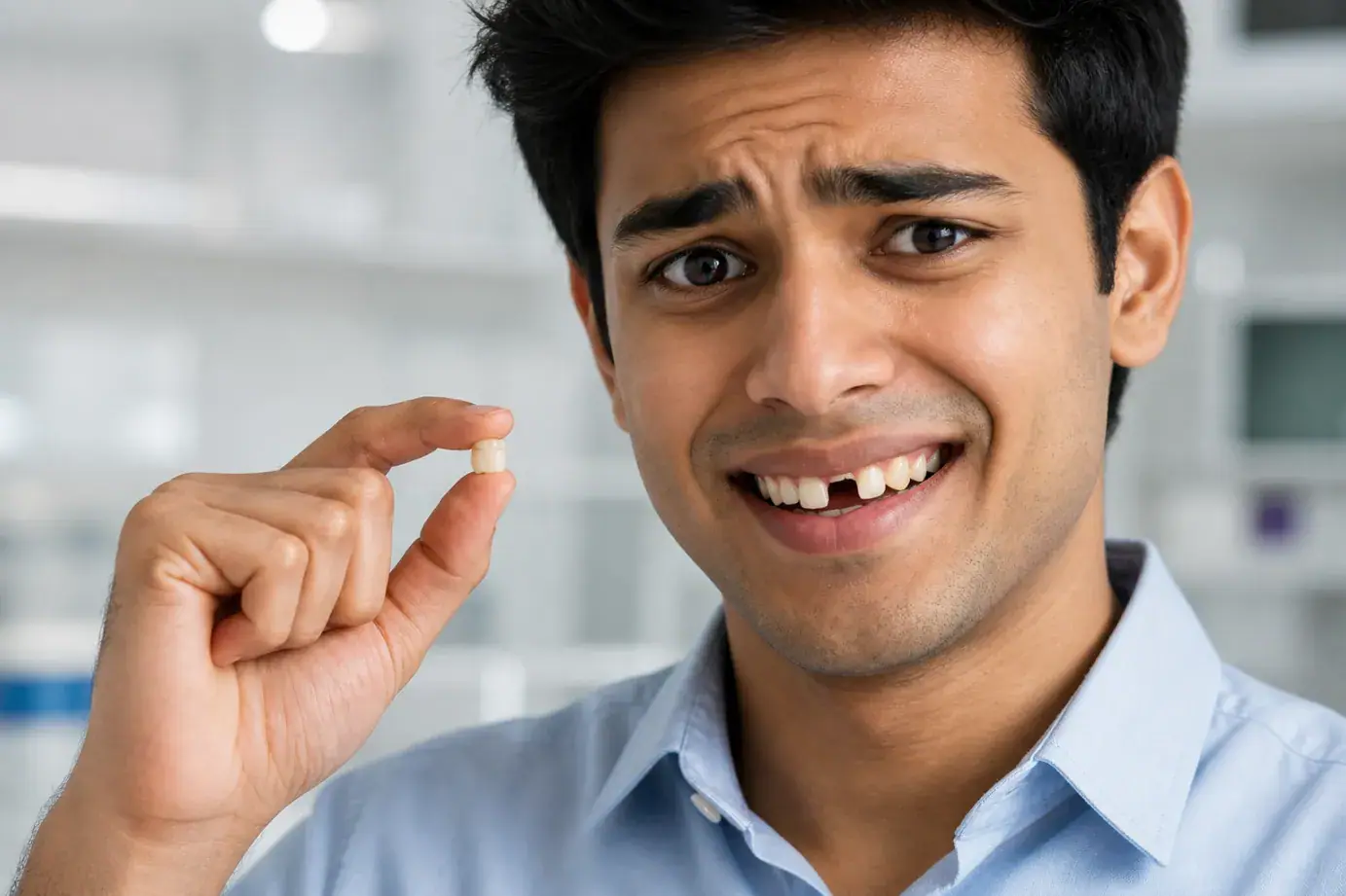
What happens when a tooth is knocked out
A tooth that has been completely displaced from its socket — known clinically as an avulsed tooth — is one of the few genuine dental emergencies where the clock starts the moment the injury occurs. Unlike a chipped or cracked tooth, which can wait a day or two for assessment, an avulsed tooth has a narrow survival window. The periodontal ligament fibres attached to the root begin to die within minutes of leaving the socket, and once those cells are lost, reimplantation becomes far less predictable.
Understanding what to do — and what not to do — in the first 30 to 60 minutes can mean the difference between saving the tooth and losing it permanently.
Step-by-step avulsed tooth first aid
Follow these steps in order. Stay as calm as you can; panicked handling causes additional damage.
1. Find the tooth immediately
Locate the tooth and pick it up by the crown — the white part you normally see in the mouth. Do not touch the root. The root surface carries the ligament cells that make reimplantation possible, and even clean-looking hands carry oils and bacteria that can damage them.
2. Assess the tooth
Check whether the tooth is:
- A permanent (adult) tooth — reimplantation is appropriate
- A baby (primary) tooth — do not attempt to reimplant; doing so can damage the developing permanent tooth underneath
- Intact, or broken into fragments
If there are fragments, collect them and bring them with you. Only permanent teeth should be reimplanted.
3. Rinse gently if the tooth is dirty
If the tooth has visible dirt on it, rinse it briefly — no more than ten seconds — under cool running water or saline. Do not scrub, do not use soap, do not wrap it in tissue or cotton wool, and do not let it dry out.
4. Reimplant if you can
For a cooperative adult or older child, the single most effective avulsed tooth first aid step is to place the tooth back into the socket yourself:
- Orient the tooth correctly (smooth face forward)
- Gently push it into the socket until it is level with the neighbouring teeth
- Have the person bite gently on a clean cloth or gauze to hold it in position
- Go to a dentist immediately
This sounds daunting, but self-reimplantation within minutes — even before professional care — significantly improves outcomes.
5. If reimplantation is not possible, store the tooth correctly
Not every situation allows immediate reimplantation. In those cases, keeping the tooth moist in the right medium is critical:
- Best option: Hanks Balanced Salt Solution (sold as Save-A-Tooth kits in some pharmacies)
- Good option: Cold fresh whole milk
- Acceptable: The patient's own saliva — either held in the cheek pouch or in a small container of saliva
- Last resort: Saline solution
- Never use: Tap water (hypotonic, it damages cells quickly), dry tissue, or ice
6. Get to a dental clinic within 30–60 minutes
This is the most important number to remember. Research referenced in guidelines from the International Association of Dental Traumatology (IADT) consistently shows that teeth reimplanted within 30 minutes have the highest rates of long-term survival. After 60 minutes dry time, the prognosis drops considerably. Every minute counts — call ahead so the clinic can prepare.
Managing pain and bleeding at the site
Once the tooth has been dealt with, attend to the patient:
- Apply gentle pressure to the empty socket with damp gauze or a clean cloth
- A cold compress on the outside of the face can help reduce swelling
- Paracetamol can be given for pain; avoid aspirin (it thins the blood)
- Do not probe the socket with fingers or tongue
- If bleeding does not slow within 15–20 minutes, this is itself a medical concern — seek care urgently
When children are involved
Dental trauma in children needs an extra layer of caution. As noted above, primary (baby) teeth should not be reimplanted. However, the socket and surrounding tissue still need professional examination — there may be damage to bone or to the permanent tooth developing beneath.
For children with a knocked out permanent tooth (which can happen from age six or seven onwards), the same first-aid steps apply, but cooperation may be limited. In those cases, milk storage and rapid transport are the priority. Our MDS specialists in paediatric and restorative dentistry work together in such cases to assess both the immediate injury and any longer-term developmental impact.
What to expect at the dental clinic
When you arrive, the dental team will:
- Take a focused history — when did the injury happen, how was the tooth stored
- Assess the socket for fracture or contamination
- Clean and reimplant the tooth under local anaesthesia if not already done
- Place a flexible splint to stabilise the tooth for typically 1–2 weeks
- Prescribe antibiotics and, in many cases, arrange a tetanus check with a physician
- Schedule follow-up visits — avulsed teeth require monitoring for months to years for signs of root resorption or pulp necrosis, which may require root canal treatment
A multi-speciality approach matters here. Depending on the severity, an oral surgeon, an endodontist, and a periodontist may each contribute to the care plan. In most cases, root canal treatment becomes necessary within a few weeks of reimplantation and is a planned, straightforward procedure rather than a crisis.
What if the tooth cannot be saved?
Sometimes a tooth is too damaged, or too much time has passed. In those situations, the focus shifts to tooth replacement options — typically a dental implant (once the site has healed), a fixed bridge, or a temporary prosthesis in the interim. None of these outcomes is ideal compared to a natural tooth, which is precisely why avulsed tooth first aid in the first hour is so consequential.
Local considerations for Noida patients
If you are in Sector 78, Noida, or the surrounding areas of Noida Extension or Greater Noida West, it helps to know your nearest multi-speciality dental clinic in advance — before an emergency happens. Road traffic in this corridor can be unpredictable at peak hours. Identifying a clinic, saving the number in your phone, and knowing a route are small steps that can save a tooth.
Dental Care Centre in Sector 78 has an MDS team available to assess dental emergencies, including cases involving a knocked out tooth. Our team includes specialists across oral surgery, endodontics, and restorative dentistry, so the full scope of trauma care can typically be managed under one roof without referral delays.
If you are calling about a dental emergency on the way in, let the reception team know immediately — the nature of an avulsed tooth means the clinical team will prioritise preparation so no time is lost on arrival.
Frequently asked questions
Can a knocked out tooth really be saved after an hour?
It becomes significantly less likely, but not always impossible. Teeth that have been stored in milk or a proper storage medium may still be reimplanted after 60 minutes, though the long-term prognosis — particularly the risk of root resorption — is less favourable. Our MDS team reports that even in delayed cases, reimplantation is sometimes attempted to preserve bone volume and tissue architecture, even if long-term survival of the tooth itself is uncertain.
Is reimplanting the tooth myself safe?
Yes, in most cases, self-reimplantation is encouraged by clinical guidelines for permanent teeth in adults and older children. The key is handling only the crown, rinsing briefly if needed, and not forcing the tooth. If it does not seat easily, do not force it — place it in milk and go directly to a dental clinic.
What if a baby tooth gets knocked out?
Do not attempt to reimplant a primary (baby) tooth. Doing so risks damaging the permanent tooth forming beneath it. However, do seek a dental assessment promptly, as the socket, bone, and underlying tooth bud all need to be examined.
Will I definitely need a root canal after reimplantation?
In most cases, yes — particularly in adults. Because the nerve and blood supply to the tooth are severed at the time of injury, the pulp typically cannot survive. Root canal treatment is usually planned within 1–2 weeks of reimplantation and is a routine part of the recovery protocol rather than a sign that something has gone wrong.
What is the best thing to store a knocked out tooth in?
Cold milk is the most practical and widely available option for most people. Avoid tap water, which damages the root cells. If the person is conscious and calm, carrying the tooth in the cheek (inside the lower lip) is also a viable short-term option — saliva provides a reasonable storage environment.
What if there is a lot of bleeding from the socket?
Moderate bleeding that slows with gentle gauze pressure is expected. If bleeding is heavy and does not reduce within 15–20 minutes, or if the person feels faint, seek immediate medical attention. Significant bleeding may indicate damage beyond the tooth socket itself.
A note from our team
The information in this guide is intended for general awareness and reflects widely accepted clinical guidelines for dental trauma management. It is not a substitute for professional assessment — every dental emergency is different, and individual factors such as the patient's age, medical history, and the specifics of the injury all influence the appropriate course of action. If you or someone with you has experienced a knocked out tooth or any other dental emergency, we encourage you to contact Dental Care Centre, Sector 78, Noida, to arrange an urgent consultation with our team.
Our doctors do free 15-minute consultations. Come in with a question, leave with a plan.
Treatments mentioned in this article
More from the Blog
All 23 articles →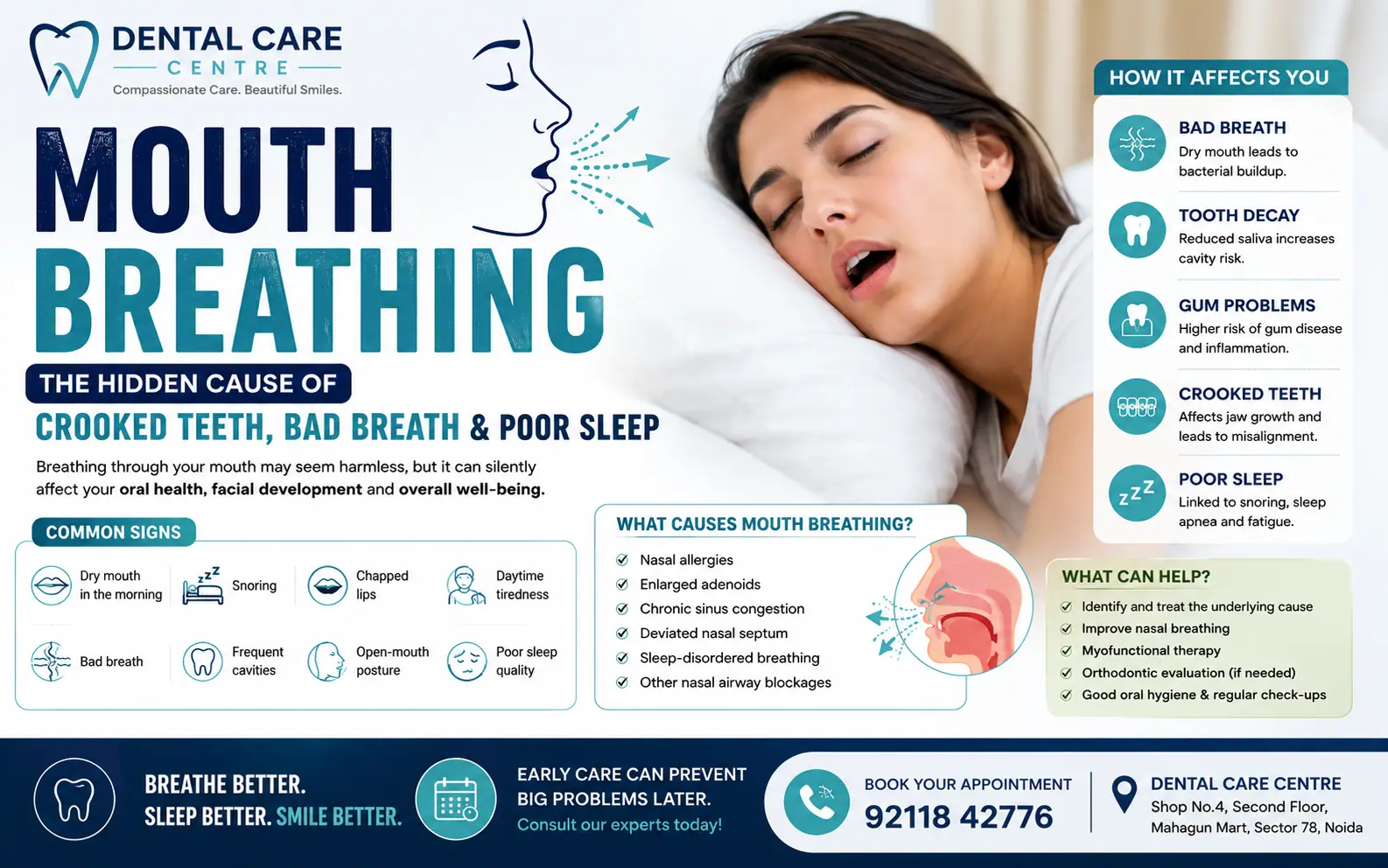
Mouth Breathing: The Hidden Cause of Crooked Teeth, Bad Breath & Poor Sleep
Mouth breathing can affect more than just your sleep. Learn how it contributes to bad breath, gum disease, crooked teeth, and facial development—and what you can do about it.
The Dental Hygiene Routine Your Dentist Recommends
Discover the oral care tips dentists actually stand behind — from brushing angles to flossing technique — so your daily habits genuinely protect your teeth.

Why Teeth Become Sensitive: Causes, Prevention and Treatment
Sharp pain when drinking cold water or eating sweets? Learn what drives tooth sensitivity, how to prevent it, and which treatments actually work.