8 Signs You Should See a Dentist Immediately

From persistent toothache to a knocked-out tooth, learn the 8 warning signs that mean you need urgent dental care — before the problem gets worse.
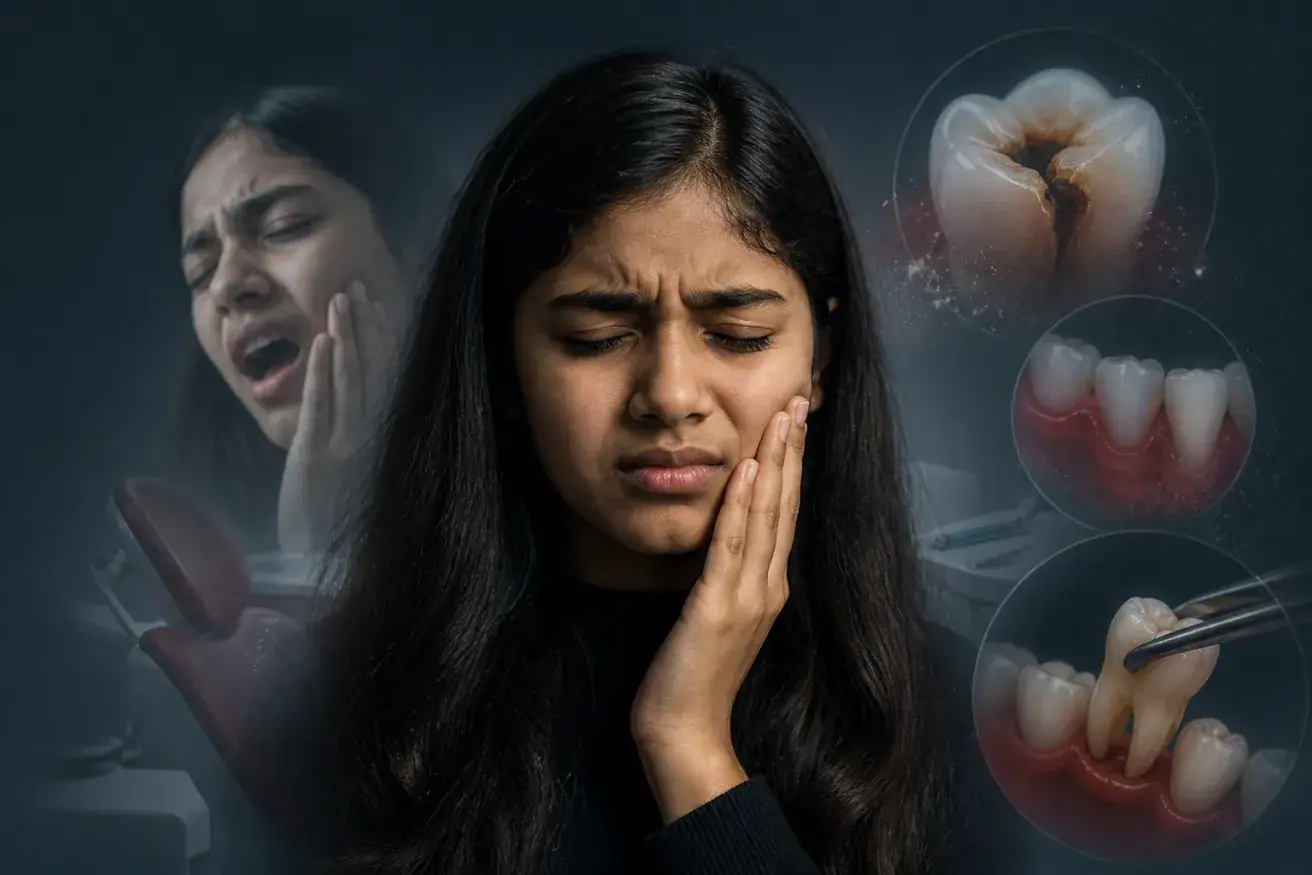
When a dental problem cannot wait
Most of us are guilty of putting off dental visits. A little sensitivity here, a mild ache there — it is easy to convince yourself it will pass. Sometimes it does. Often, it does not, and by the time you act, a straightforward fix has become a complex one.
Knowing when to see a dentist urgently — rather than waiting for your next routine appointment — can be the difference between saving a tooth and losing it. The eight signs below are the ones our MDS specialists flag most consistently as requiring prompt attention.
1. Toothache that does not go away on its own
A toothache that persists for more than a day or two is rarely trivial. Understanding toothache causes helps explain why: pain can stem from deep decay, a cracked tooth, an abscess, or a dying nerve. Over-the-counter painkillers may quiet the signal, but they do not address the source.
If the pain is severe, throbbing, or wakes you at night, treat it as a dental emergency. Leaving an infected tooth untreated risks spread to the jaw, neck, or beyond — a situation that can become a medical emergency, not just a dental one.
2. Swelling in your jaw, face, or gums
Swelling is your body signalling that something is actively wrong. A localised gum abscess, an infected tooth root, or a spreading bacterial infection can all cause facial or jaw swelling. This is one of the clearest indicators of a dental emergency in Noida or anywhere else — do not wait and see if it subsides.
If swelling is accompanied by fever, difficulty swallowing, or trouble breathing, go to a hospital emergency department immediately.
3. A knocked-out or dislodged permanent tooth
Time is critical here. A knocked-out adult tooth has the best chance of being re-implanted if you reach a dentist within 30–60 minutes. Handle the tooth by the crown (not the root), rinse it gently with clean water without scrubbing, and keep it moist — either in milk, saline, or between your cheek and gum — while you travel to the clinic.
This is a textbook dental emergency. Do not file it away for Monday morning.
4. A chipped, cracked, or broken tooth causing pain
Not every chipped tooth is an emergency — a small cosmetic chip on a front tooth, for example, can often wait a few days. However, if the break is significant, if you can see a dark line running through the tooth, or if the exposed area is causing pain or sensitivity, prompt care is needed. A crack that reaches the pulp is one of the more common toothache causes and typically requires root canal treatment or extraction if left too long.
For a helpful overview of repair options across a range of situations, see our guide on how to fix a chipped tooth.
5. Bleeding gums that will not stop
Occasional minor bleeding after flossing, especially if you have just started a flossing routine, is common. Persistent bleeding, bleeding that occurs spontaneously, or gums that bleed every time you brush are not normal. These symptoms are often the earliest visible signs of gum disease, a condition that is far easier to treat in its early stages.
Our post on the early signs of gum disease most Indians ignore covers the full picture — but if bleeding is heavy or accompanied by pain, do not wait to book a routine appointment.
6. Sudden or severe tooth sensitivity
Sensitivity to hot and cold is extremely common, and in many cases it reflects enamel wear or exposed root surfaces rather than anything urgent. But when sensitivity arrives suddenly, affects a single tooth, or is sharp enough to stop you mid-meal, it warrants attention. This pattern of sensitivity is one of the classic toothache causes linked to a cracked tooth or a failing restoration.
If you have been managing background sensitivity for a while, our article on why teeth become suddenly sensitive is a useful starting point before your appointment.
7. A lost filling, crown, or dental restoration
A lost filling or crown is not cosmetically inconvenient — the exposed tooth structure is now vulnerable to fracture, sensitivity, and decay. Temporary dental cement from a pharmacy can protect the area briefly, but it is not a substitute for professional repair. Most dental practices can see you within a day or two for a lost restoration; contact your dentist the same day rather than waiting.
8. Ulcers or unusual patches that do not heal
A mouth ulcer that heals within 10–14 days is almost always benign. An ulcer, white patch, red patch, or unexplained lump that persists beyond two weeks without healing needs to be examined by a dentist or oral medicine specialist. While the cause is very often something entirely harmless, oral tissue changes that do not resolve on their own should never be self-diagnosed.
Early investigation is always preferable to a delayed one.
What to do when you suspect a dental emergency
If you are unsure whether your situation qualifies as a dental emergency, a useful rule of thumb is: if it is causing significant pain, swelling, or you have physically lost or damaged a tooth, call your dentist now. Most dental clinics reserve same-day or next-day slots for urgent cases.
While you wait:
- Take a standard dose of ibuprofen (if appropriate for you) to reduce pain and inflammation
- Apply a cold compress to the outside of your cheek for swelling — 10 minutes on, 10 minutes off
- Avoid very hot, cold, or sweet food and drink on the affected side
- Do not apply aspirin directly to the gum — this can cause a chemical burn
Knowing when to see a dentist urgently, and what to do in the interim, helps you stay calm and act effectively.
Local considerations for Noida patients
Patients living in Sector 78 and the wider Noida region sometimes find it difficult to locate a multi-speciality dental clinic that can handle urgent cases across different disciplines — from oral surgery to endodontics — without referring you elsewhere. At Dental Care Centre, our team of MDS-qualified specialists covers the full range of emergency dental needs under one roof, which means fewer referral delays when time matters.
Noida's rapid urban growth has brought more choice in dental care, but clinical standards vary. When choosing where to go for a dental emergency in Noida, look for a clinic that follows current clinical guidelines (such as those from the Dental Council of India), employs specialists rather than general practitioners for complex cases, and has on-site imaging available for same-day diagnosis.
If you are expecting and concerned about a dental problem, it is worth knowing that many urgent procedures are safe to carry out during pregnancy with appropriate precautions. Our post on pregnancy and dental care explains what can and cannot wait.
Frequently asked questions
How do I know if my toothache is a dental emergency?
A toothache that is severe, throbbing, persistent for more than 48 hours, or accompanied by swelling or fever should be treated as an emergency. Mild, intermittent aches that came on recently warrant a prompt (but not necessarily same-day) appointment. When in doubt, call your dental clinic and describe your symptoms — they can advise you on urgency.
Can a dental abscess go away on its own?
No. An abscess is a bacterial infection and will not resolve without treatment. It may appear to settle temporarily if it drains, but the infection remains and can spread. Antibiotics prescribed by a dentist may control the infection short-term, but definitive treatment — usually root canal therapy or extraction — is always required. Our overview of root canal pain myths and realities addresses some common fears about this procedure.
What should I do if I knock out a tooth?
Pick the tooth up by the crown, not the root. If it is dirty, rinse it briefly under clean water — do not scrub. Keep it moist (milk is ideal) and get to a dentist within 30–60 minutes. The sooner you arrive, the better the chances of successful re-implantation.
Is a cracked tooth always an emergency?
Not always. A hairline crack in enamel with no pain may simply need monitoring. However, a crack that causes pain when biting, sensitivity to temperature, or has extended towards the gum line is urgent, as it may be compromising the tooth's nerve or structural integrity. Have it assessed promptly.
When should bleeding gums prompt an emergency visit versus a routine appointment?
Heavy, uncontrolled bleeding — for example, following an injury or a recent extraction that will not clot — warrants same-day or emergency care. Persistent but lower-level bleeding that occurs during brushing or eating is a strong reason to book an appointment within the week, but is not typically an acute emergency on its own.
Can I take painkillers and wait a few days before seeing a dentist?
Painkillers can make a dental problem more manageable in the short term, but they do not treat the underlying cause. In most cases, waiting a few days is acceptable for mild, stable symptoms. For severe pain, swelling, or any of the signs listed in this post, waiting significantly increases the risk of the situation becoming more complex and costly to treat.
A note from our team
This article is intended as general health information to help you make informed decisions, and does not replace a clinical assessment for your specific situation. Dental presentations vary considerably from person to person, and only a qualified dentist examining you directly can provide a diagnosis and appropriate treatment plan. If you recognise any of the signs described above, we encourage you to book a consultation at Dental Care Centre, Sector 78, Noida — our multi-speciality team is here to help you understand your options calmly and clearly.
Our doctors do free 15-minute consultations. Come in with a question, leave with a plan.
Treatments mentioned in this article
More from the Blog
All 23 articles →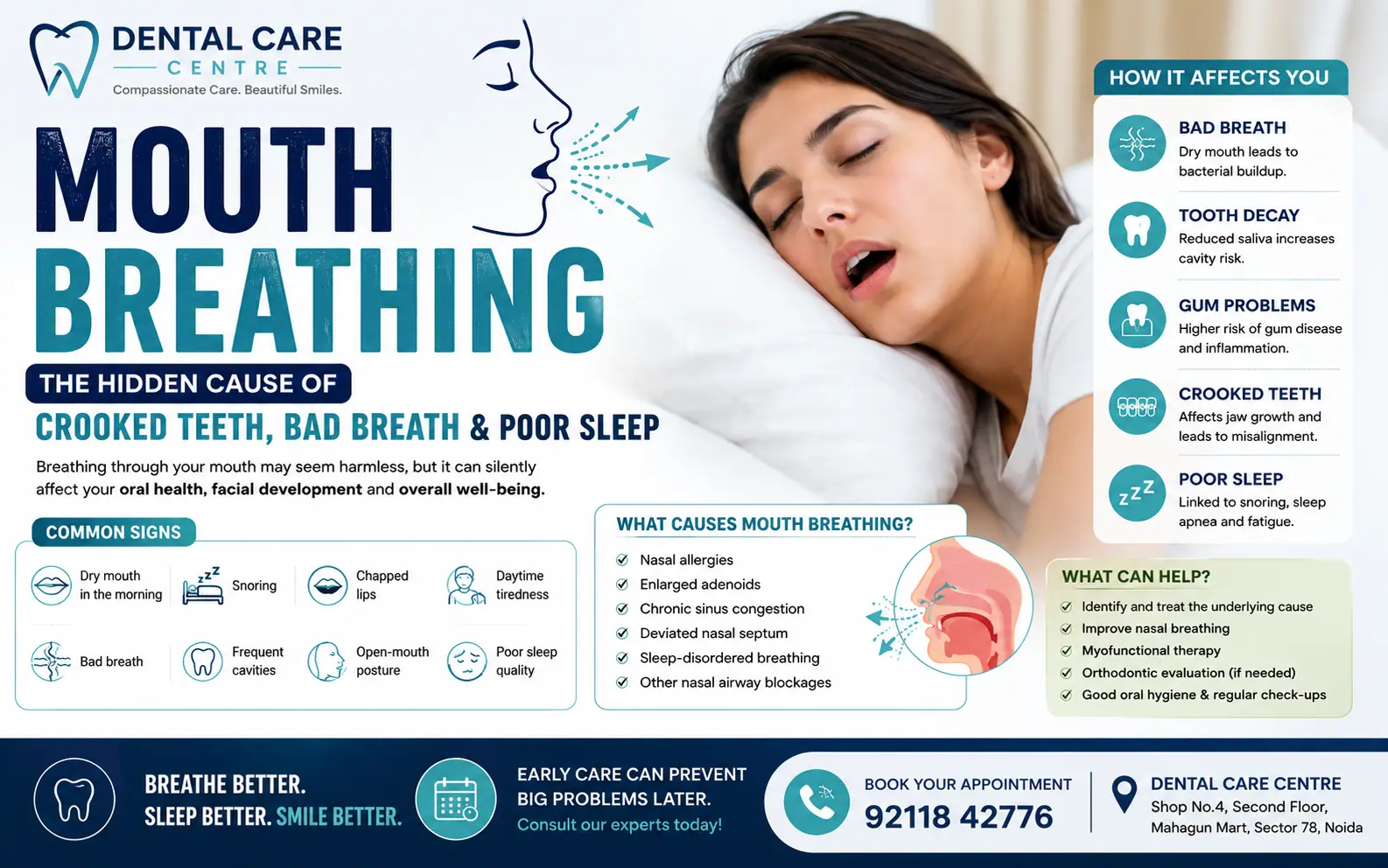
Mouth Breathing: The Hidden Cause of Crooked Teeth, Bad Breath & Poor Sleep
Mouth breathing can affect more than just your sleep. Learn how it contributes to bad breath, gum disease, crooked teeth, and facial development—and what you can do about it.

The Dental Hygiene Routine Your Dentist Recommends
Discover the oral care tips dentists actually stand behind — from brushing angles to flossing technique — so your daily habits genuinely protect your teeth.

Why Teeth Become Sensitive: Causes, Prevention and Treatment
Sharp pain when drinking cold water or eating sweets? Learn what drives tooth sensitivity, how to prevent it, and which treatments actually work.