Dental Veneers vs Crowns: Which Is Right for You?

Not sure whether veneers or crowns are the better fix for your teeth? This guide breaks down the key differences so you can make an informed decision.
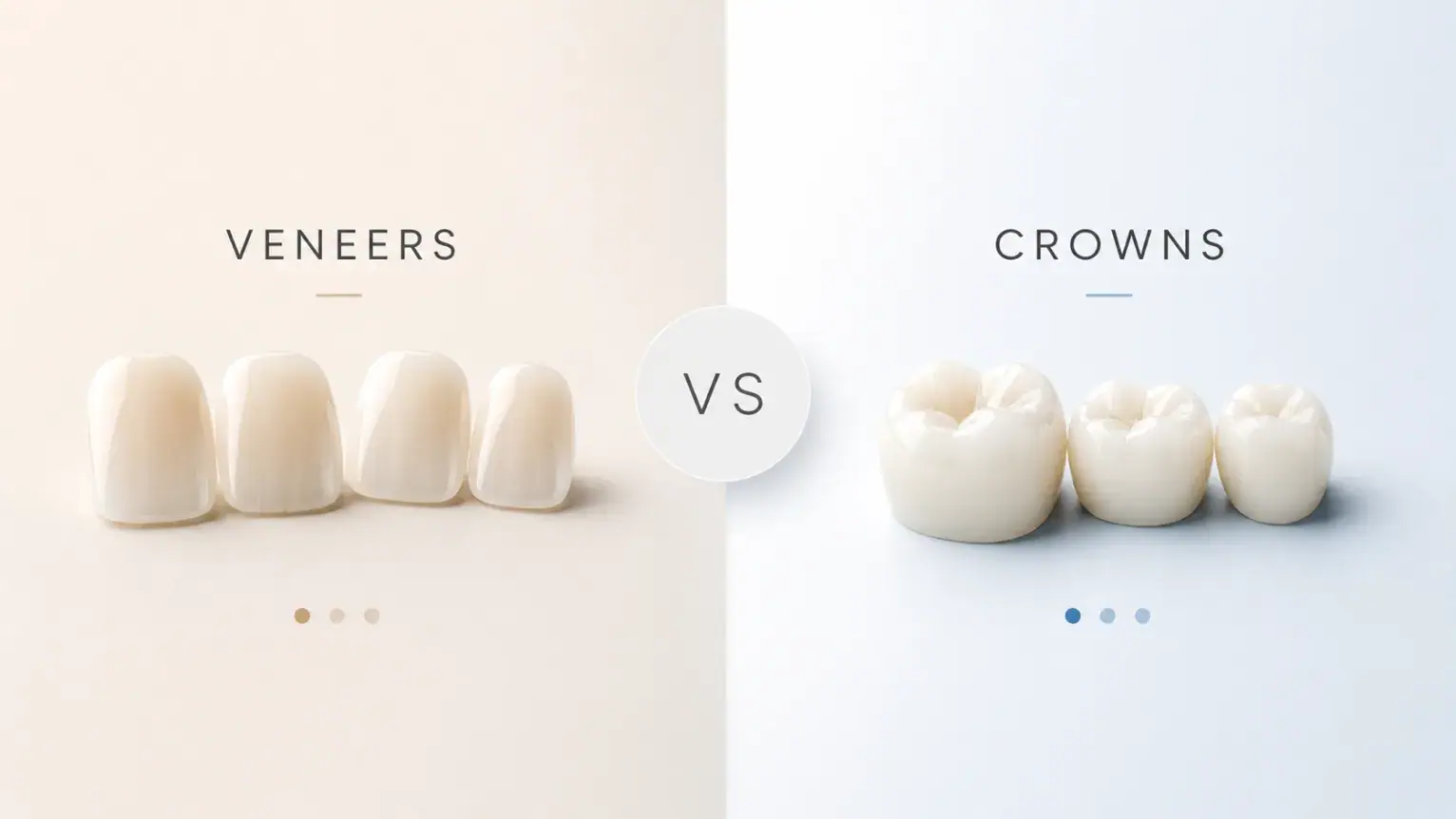
Understanding the difference between veneers and crowns
When a tooth is damaged, discoloured, or simply not the shape you would like it to be, two of the most commonly recommended restorations are dental veneers and dental crowns. Both can produce a natural-looking, lasting result — but they work in very different ways, and choosing the wrong option for your situation can mean unnecessary tooth reduction or a restoration that does not hold up over time.
This guide walks through how each option works, what each one is best suited for, and the practical factors — including treatment time and crown cost in Noida — that are worth considering before you book a procedure.
What is a dental veneer?
A veneer is a thin shell of porcelain (or, less commonly, composite resin) that bonds to the front surface of a tooth. Because it covers only the visible face of the tooth, preparation is minimal: typically 0.3–0.7 mm of enamel is removed to allow the veneer to sit flush.
When veneers are usually recommended
- Teeth that are healthy and structurally sound but have cosmetic concerns
- Permanent discolouration that does not respond to whitening (for example, tetracycline staining or fluorosis)
- Minor chips, small gaps, or slight irregularities in shape or length
- Cases where preserving as much natural tooth structure as possible is a priority
Because preparation is conservative, veneers are generally considered a better choice when the underlying tooth is largely intact. Our MDS specialists in smile design note that the ideal candidate for veneers has sufficient enamel thickness and no significant structural damage.
What is a dental crown?
A crown (sometimes called a cap) encases the entire visible portion of a tooth above the gum line. This full coverage means more tooth structure must be reduced — typically 1.5–2 mm all the way around — but it also means the crown can support and protect a tooth that veneers simply cannot.
When crowns are usually recommended
- Teeth weakened by large cavities, extensive old fillings, or fractures
- Teeth that have undergone root canal treatment, which can make them more brittle
- Severe wear from grinding (bruxism)
- Cases where the tooth needs both functional restoration and aesthetic improvement
- As the final restoration on a dental implant
Crowns are available in several materials — full ceramic (zirconia or lithium disilicate), porcelain-fused-to-metal (PFM), and full metal — each with different strength and aesthetic profiles. An MDS prosthodontist will match the material to the tooth's position, the bite forces involved, and your aesthetic goals.
Veneers vs crowns: a side-by-side comparison
Tooth preparation
Veneers remove a small amount of enamel from the front surface only. Crowns require reduction on all sides. Both changes are permanent, but crown preparation is more extensive. This is why clinicians following evidence-based guidelines generally advise choosing veneers whenever structural support is not the primary concern.
Strength and durability
A well-made porcelain veneer can last 10–15 years or longer with good oral hygiene and no heavy grinding habits. Crowns, particularly zirconia crowns, can last 15–25 years in many cases and are better suited to teeth under high biting load. If you clench or grind, your dentist may recommend a night guard alongside either restoration.
Aesthetic outcome
For purely cosmetic cases on the front teeth, high-quality veneers are difficult to distinguish from natural enamel — they can be translucent, layered, and characterised to match adjacent teeth precisely. Crowns can also look excellent, especially full-ceramic options, but because they cover the entire tooth, shade-matching the gum margin requires careful attention from an experienced ceramist.
Reversibility
Neither treatment is truly reversible once enamel has been removed, but veneer preparation is considerably less invasive. Some clinicians offer minimal-prep or no-prep veneers for very specific cases, though these are not suitable for everyone and should be assessed individually.
Procedure and timeline
Both restorations typically require at least two appointments: one for preparation and impressions (or digital scanning), and one for fitting the final restoration. In between, a laboratory fabricates the veneer or crown, which usually takes one to two weeks. Some clinics with in-house CAD/CAM milling equipment can produce same-day crowns, though this varies by practice.
Factors that should guide your decision
The veneers vs crowns decision is not simply cosmetic versus functional — several overlapping factors come into play:
- Extent of existing damage: A cracked or heavily filled tooth almost always needs a crown.
- Position in the mouth: Back teeth bear far greater forces; crowns are more commonly used there.
- Gum and bone health: Any active gum disease should be treated before placing either restoration.
- Your bite: A deep overbite or heavy grinding habit influences which material and which restoration is most durable.
- Budget: Crown cost in Noida varies by material and clinic, but zirconia crowns generally cost more than composite veneers and less than or comparable to layered porcelain veneers. Our team can provide a detailed treatment plan with costs before you commit to anything.
- Long-term maintenance: Both require diligent brushing, flossing, and regular check-ups.
A multi-speciality assessment — where a prosthodontist, and where relevant a periodontist or orthodontist, reviews your case — often surfaces options you might not have considered, such as addressing a bite issue first to extend the life of any cosmetic work.
Can you have both veneers and crowns in one treatment plan?
Absolutely. In a full smile design or smile makeover plan, it is common to place veneers on the upper front teeth (which are structurally sound but cosmetically imperfect) while placing crowns on teeth that have had root canal treatment or significant decay. The restorations are shade-matched so the final result looks cohesive. Coordinating this across multiple teeth requires careful planning and, in most cases, a wax-up or digital simulation so you can preview the outcome before any tooth is touched.
Local considerations for Noida patients
For adults living and working in Noida and the surrounding areas, access to a multi-speciality dental centre matters particularly for complex cases. At Dental Care Centre in Sector 78, Noida, our MDS-qualified team includes specialists in prosthodontics and smile design, which means the veneers vs crowns decision is made with input from clinicians who manage these cases routinely — not a one-size-fits-all recommendation. Patients travelling from Greater Noida, Noida Extension, or nearby sectors generally find that consolidating consultations, impressions, and fittings in one location reduces total appointment time significantly.
Crown cost in Noida can vary quite widely depending on the material chosen, the complexity of preparation, and whether any pre-treatment work such as a core build-up or gum contouring is needed. We provide itemised treatment plans so patients understand exactly what each stage involves before proceeding. There are no hidden charges for impressions or temporaries when they are part of the quoted treatment.
For dental veneers in Noida, the same principle applies: a thorough clinical assessment before any enamel is prepared is non-negotiable. We use digital shade-matching and, where appropriate, digital smile design software so you can see a realistic preview of your proposed outcome. This step alone prevents a significant proportion of post-treatment dissatisfaction.
Frequently asked questions
Can I get veneers if I have a habit of grinding my teeth?
Grinding (bruxism) significantly increases the risk of chipping or fracturing veneers. In many cases, the recommended approach is to manage the grinding with a custom night guard first, and then reassess. Depending on the severity of wear, crowns in a stronger material such as zirconia may be more appropriate than veneers. Your dentist will evaluate the wear patterns on your teeth before making a recommendation.
How long does the veneers vs crowns process actually take?
For most patients, each restoration takes two clinical appointments spaced one to two weeks apart. If pre-treatment is needed — for example, gum reshaping or a root canal — the overall timeline extends. A full smile design case involving multiple teeth may take four to eight weeks from the initial consultation to the final fitting.
Will my veneers or crown look obviously artificial?
With modern ceramic materials and an experienced ceramist, both veneers and crowns can closely mimic natural tooth enamel, including its translucency and surface texture. The outcome depends heavily on the quality of the laboratory work and the clinician's attention to shade, shape, and bite. Reviewing the proposed shade and shape before final cementation — which reputable practices allow — gives you the opportunity to request adjustments.
What is the crown cost in Noida, roughly?
Crown cost in Noida varies by material: metal crowns are typically the most affordable, porcelain-fused-to-metal falls in the mid-range, and full-zirconia or lithium disilicate crowns are at the higher end. The cost also reflects any preparatory work required. We recommend requesting an itemised quote during your consultation rather than comparing headline prices, since the scope of treatment differs between patients.
Is it possible to whiten teeth after getting veneers or crowns?
Ceramic veneers and crowns do not respond to tooth-whitening agents. If you are considering whitening, it is generally advisable to whiten your natural teeth first and then match the shade of the restoration to the whitened result. Whitening after placement will create a mismatch between your natural teeth and your restorations.
How do I care for veneers or crowns at home?
Brush twice daily with a non-abrasive fluoride toothpaste, floss daily (paying attention to the gum margins of the restoration), and attend regular hygiene appointments. Avoid biting hard objects such as ice or pen caps directly on the restoration. If you grind at night, wearing a custom night guard will substantially extend the lifespan of your investment.
A note from our team
This article is intended as general information only and does not constitute clinical advice for any individual patient. Every case is different, and the right choice between dental veneers and a crown depends on factors that can only be assessed through a proper clinical examination. If you are weighing up your options and would like a clear, no-pressure evaluation, we invite you to book a consultation with our smile design team at Dental Care Centre, Sector 78, Noida — we are here to help you make the decision that is right for your teeth, your bite, and your long-term oral health.
Free 15-minute consultation. We'll review your specific case and walk you through your options — no pressure, no upselling.
Treatments mentioned in this article
More from the Blog
All 23 articles →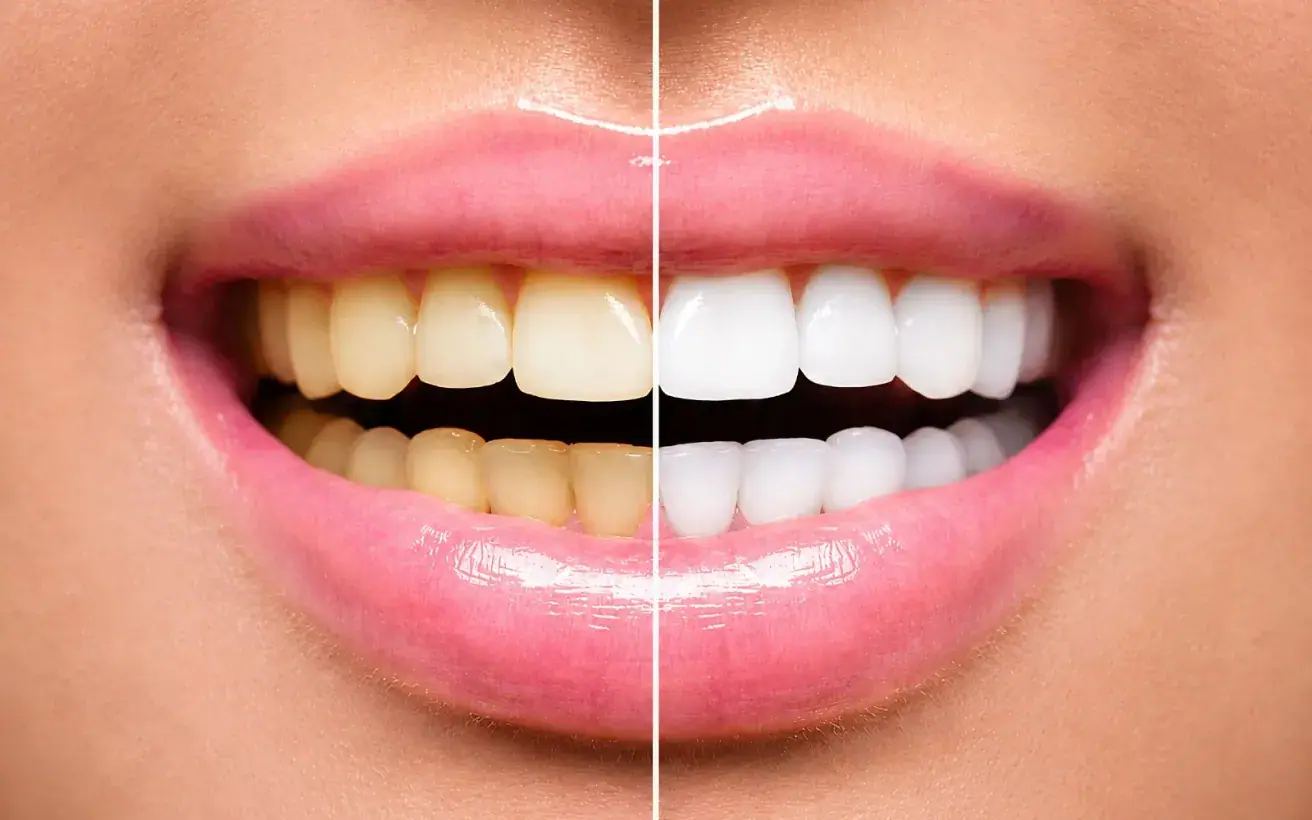
Teeth Whitening: What Actually Works and What Doesn't
From professional whitening to strips and charcoal pastes — a clear-headed guide to what genuinely lifts tooth colour and what simply won't.
Why Regular Dental Check-ups Are Essential for a Healthy Smile
Regular dental check-ups help prevent cavities, gum disease, and costly treatments. Learn why visiting your dentist every six months matters.
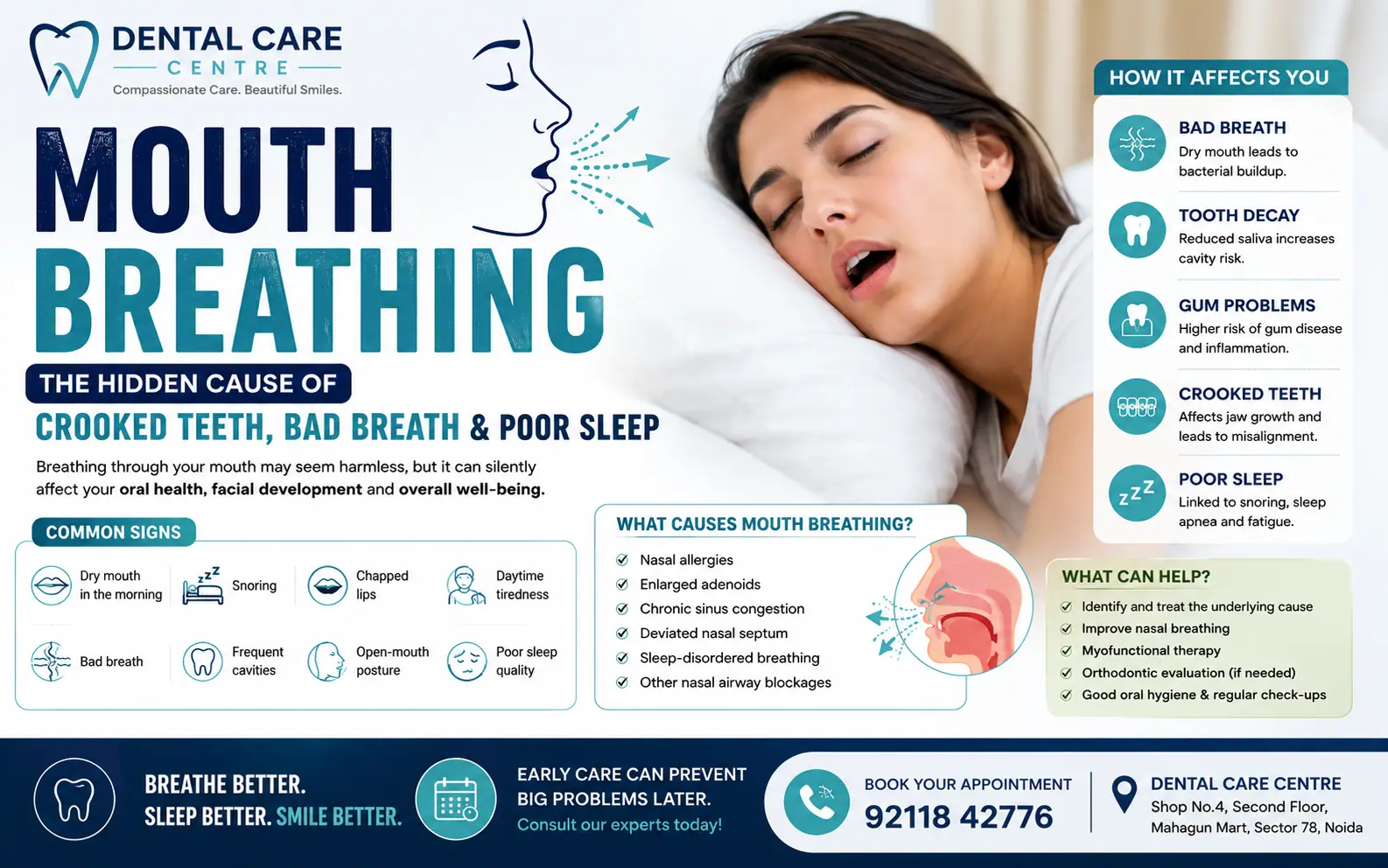
Mouth Breathing: The Hidden Cause of Crooked Teeth, Bad Breath & Poor Sleep
Mouth breathing can affect more than just your sleep. Learn how it contributes to bad breath, gum disease, crooked teeth, and facial development—and what you can do about it.