Smile Design: What Actually Happens Before We Touch a Single Tooth

A good smile design is 80% planning and 20% drilling. Here's what the planning actually looks like — and why it's the part that decides whether you'll love the result.
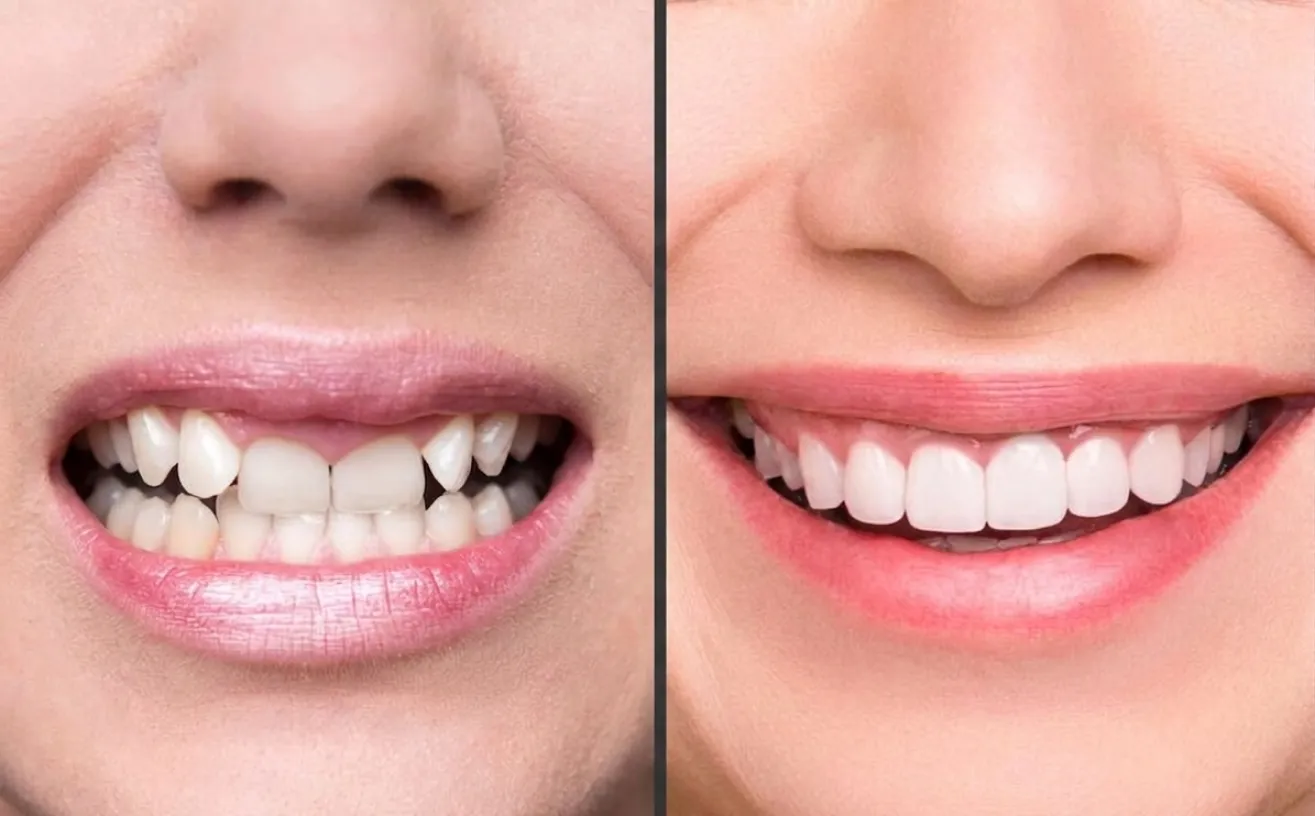
The patients who walk out of our clinic with the most natural-looking smiles aren't the ones who got the most expensive veneers. They're the ones who spent the most time before the veneers — in the planning chair.
Smile design has become a marketing word in India. The actual clinical process behind a great result is technical, slow, and unglamorous. This article walks through what happens — or what should happen — before any tooth is touched.
Why most smile makeovers fail aesthetically
Walk through any cosmetic dentistry feed and you'll see two failure modes repeating:
- Toilet bowl white: teeth so white they look painted on, against the surrounding skin tone.
- Picket fence uniformity: every tooth identical in shape and size, like a row of tiles.
Both come from the same root cause — skipping the design phase and going straight to fabrication. The lab makes what the dentist sends, and if the dentist sent "ten upper teeth, B1 shade, square shape," that's exactly what you get back. A natural smile has slight asymmetry, character lines, edge translucency, and a tooth shape that fits your face.
Step 1: Photographs that tell the truth
Before anything, we take a structured photo set:
- Full-face frontal at rest
- Full-face frontal smiling
- Three-quarter profile both sides
- Lips-only retracted view
- Lips-only relaxed lip view
- Teeth-only with cheek retractors
- Lateral views with teeth apart
This isn't vanity — these photos show how your teeth interact with your lips, your gum line, your face shape. A smile design done without this data is guesswork.
Step 2: The face-driven analysis
Your teeth don't exist in isolation. They sit inside a face. We look at:
- Facial midline vs dental midline — they should align (or near enough).
- Smile arc — does the curve of your upper teeth follow the curve of your lower lip? Most natural smiles do.
- Buccal corridor — the dark space at the corners of your smile. Too wide reads "narrow smile"; too small reads "denture face."
- Gingival line — the line where your gums meet your teeth. If it's uneven, no amount of veneer will look right until it's corrected.
- Phonetics — how the upper edge of your front teeth sits on the lower lip when you say "F" and "V" sounds.
This face-driven analysis is what separates a smile design from a tooth-by-tooth restoration. We're not designing teeth; we're designing how teeth show up in your face.
Step 3: Digital smile design
We then move into software (we use a combination of DSD principles and intra-oral scan data) to overlay a proposed smile onto your photographs. You see — before any tooth is touched — what the new smile will look like:
- Tooth proportions (the "golden ratio" is a starting point, not a rule)
- Edge positions
- Length of central incisors
- Whether canines need to be re-shaped
- Where the gum line should sit
You sit with us, and we change things. "More feminine?" — we soften the central edges. "Stronger?" — we square them. "Younger?" — we lengthen the centrals slightly above the laterals.
This is the longest meeting in the whole process. A good smile design discussion takes 90 minutes.
Step 4: The mock-up
This is where most clinics stop. We don't.
Once you approve the digital design, we fabricate a wax mock-up on stone models, and then transfer it directly into your mouth as a temporary using a clear silicone matrix. For roughly an hour, you have your future smile in your mouth — without any tooth being touched. You can see it in the mirror, smile, talk, send a photo to your spouse, sleep on it.
Roughly 20% of patients want changes after the mock-up. We make them, redo the mock-up, and only proceed when you genuinely love it.
Step 5: Tooth preparation — the part everyone fears
The good news: modern veneers are minimally invasive. For most cases, we remove between 0.3 mm and 0.7 mm of enamel — less than the thickness of a fingernail. In some "no-prep" cases, no enamel comes off at all.
For more involved cases — heavily worn teeth, large old fillings, internal staining — preparation goes deeper, and crowns may be the better choice than veneers. We'll tell you which.
Step 6: Temporaries — the rehearsal
You walk out with temporary veneers based on your approved mock-up. You live with them for 2–3 weeks. You eat with them, smile with them, judge them in different lighting. Anything you don't love at this stage gets adjusted before the final restorations are made.
Step 7: The final restorations
The final veneers (usually e.max lithium disilicate or fine layered porcelain) are bonded one or two at a time. The bonding itself is a precision craft — fluid contamination can ruin a flawless veneer in seconds. The final shade matching is done with you sitting up, in natural light, with mirrors at multiple angles.
Total chairtime for a 10-veneer smile design, from first photo to last bond: 8 to 12 hours, spread across 4 to 5 visits over 4 to 6 weeks.
What this all costs in Noida
Realistic 2026 ranges:
- Single composite veneer: ₹6,000 – ₹12,000
- Single porcelain veneer (e.max): ₹18,000 – ₹35,000
- Full smile design (10 upper veneers): ₹2,80,000 – ₹4,50,000
- Full smile design with gum recontouring: ₹3,50,000 – ₹5,50,000
If a clinic quotes you significantly less, ask which steps they're skipping. Almost always, it's the digital design and the mock-up — the two steps that decide whether you'll love the result.
When veneers are the wrong answer
Honestly, more often than people expect.
- Heavy bite or grinding: porcelain chips. We treat the bite first.
- Mild crowding: aligners first, then potentially no veneers needed.
- Single dark tooth: internal bleaching often solves it without restoration.
- Just yellowness: professional whitening is dramatically cheaper.
Frequently asked questions
Are veneers permanent?
The procedure is irreversible (we removed some enamel). The veneers themselves last 10–15 years before needing replacement.
Will my teeth become weaker?
Properly prepared veneers don't significantly weaken teeth. Over-prepared "veneers" that are really crowns in disguise do.
Can I just get the front 4 done?
Sometimes, yes. But blending 4 new veneers into 6 untouched teeth is harder than it sounds. We'll show you why on your photos.
Will they look fake?
Only if you ask for a fake-looking shade. Natural results are absolutely possible — they're the standard, not the exception.
A great smile design is a conversation that happens over weeks, not a single appointment. If you're considering one, book a consult and we'll spend 90 minutes on photographs and design before we ever discuss prices.
Free 15-minute consultation. We'll review your specific case and walk you through your options — no pressure, no upselling.
Treatments mentioned in this article
More from the Blog
All 23 articles →
Why Regular Dental Check-ups Are Essential for a Healthy Smile
Regular dental check-ups help prevent cavities, gum disease, and costly treatments. Learn why visiting your dentist every six months matters.
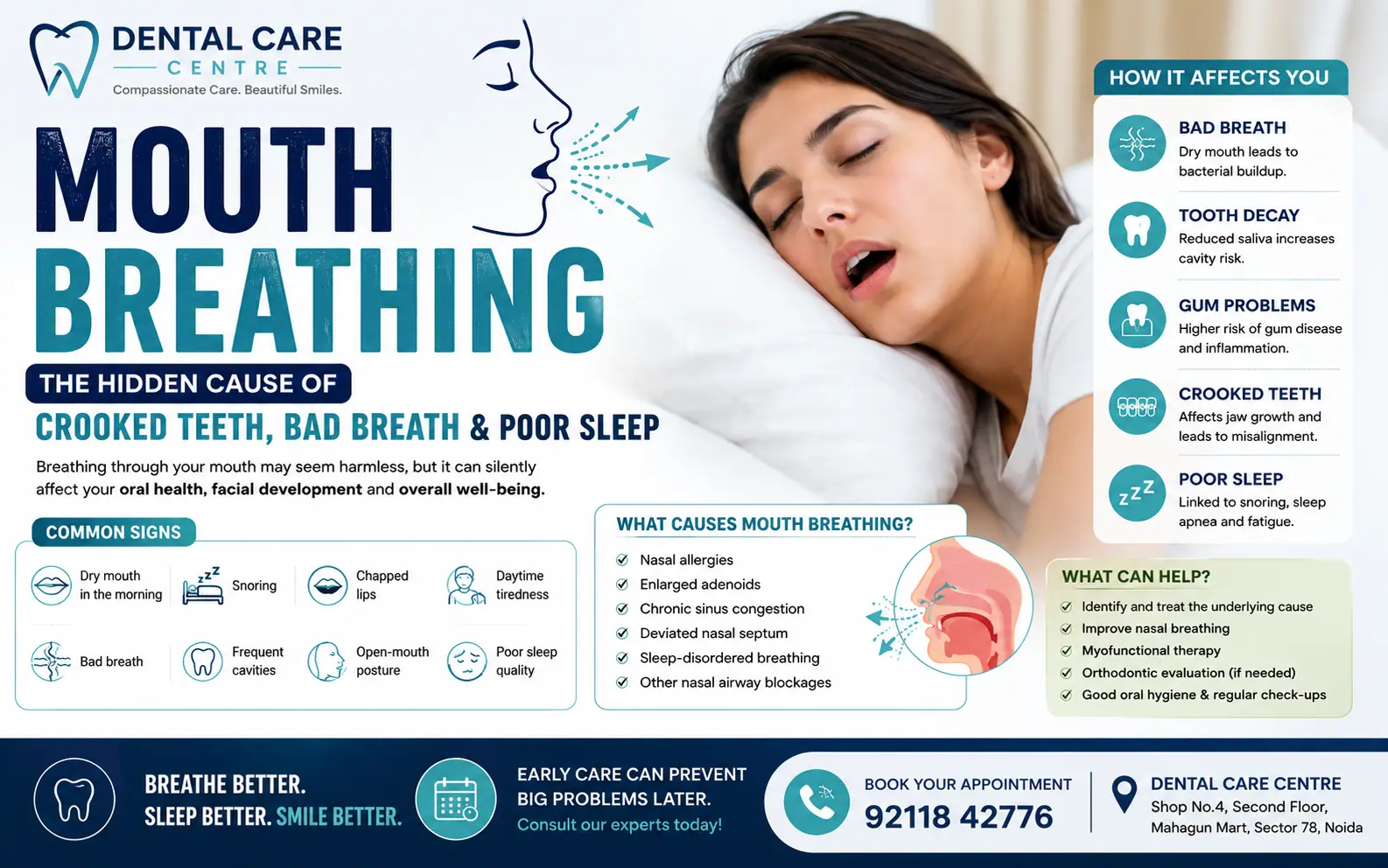
Mouth Breathing: The Hidden Cause of Crooked Teeth, Bad Breath & Poor Sleep
Mouth breathing can affect more than just your sleep. Learn how it contributes to bad breath, gum disease, crooked teeth, and facial development—and what you can do about it.

Invisible Aligners: Your Complete Patient Guide
Everything you need to know about invisible aligners — how they work, who qualifies, what treatment involves, costs, and how to choose the right clinic.