Full-Mouth Rehabilitation: When It's Worth It, and When It Isn't

Full-mouth rehab is one of the most transformative things modern dentistry can offer — and one of the most over-prescribed. Here's how to tell which side of that line your case sits on.
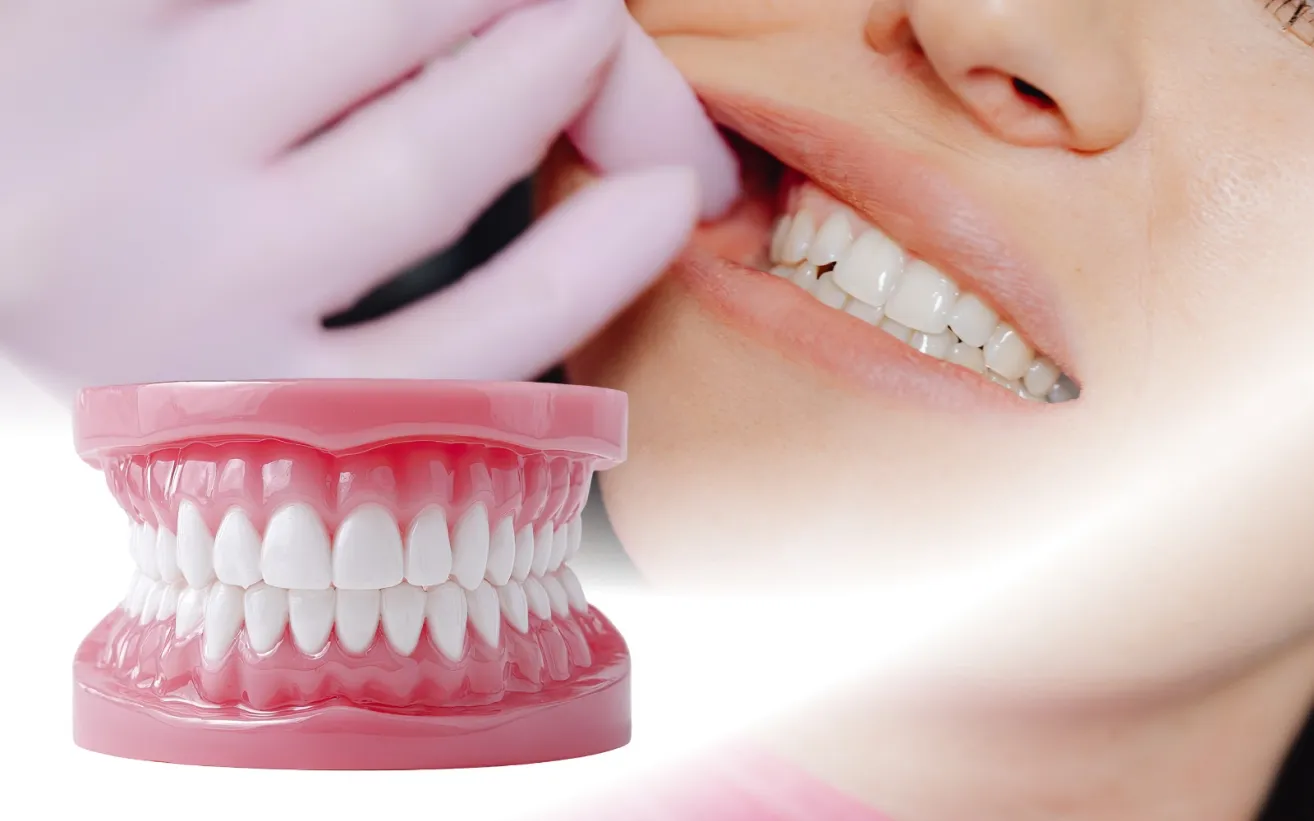
A full-mouth rehabilitation is exactly what it sounds like — restoring or replacing every tooth in the mouth as part of a single, coordinated plan. Done well, it gives someone back the function and look of a healthy 25-year-old's mouth. Done unnecessarily, it's the most expensive over-treatment in dentistry.
This article is a clinical look at when full-mouth rehab is genuinely the answer, and when it's a sledgehammer for a finishing nail.
What "full-mouth rehabilitation" actually means
The phrase covers a spectrum. At one end:
- A worn-down bite from years of grinding, where most teeth are short, flat, and chipped — and the patient's vertical face dimension has collapsed.
At the other end:
- Someone with multiple missing teeth, failing old crowns, and bite collapse who needs a comprehensive rebuild combining implants, crowns, and orthodontics.
In both cases, the unifying idea is that we cannot fix one tooth at a time, because each tooth depends on every other tooth. The bite must be re-established as a whole.
The honest test for whether you need this
You probably need full-mouth rehab if you tick three or more of these:
- Most of your teeth have been worn flat or chipped over the years
- Your face looks "shorter" than it did at 25 (the lower third has collapsed)
- You have multiple failing crowns or root-canal-treated teeth
- You hear clicking, popping, or pain from your jaw joint (TMJ)
- Your front teeth keep chipping despite repairs
- You have multiple missing back teeth and your bite has shifted forward
- Sensitivity is widespread and not from any single cause
- Your dentist has used the phrase "we need to look at this together"
You probably don't need a full-mouth rehab if:
- One or two specific teeth are the problem
- Cosmetic concern is limited to the front 6–8 teeth (a smile design covers it)
- The rest of your teeth are healthy and you have a stable bite
The phases — what good rehab looks like
A serious rehab unfolds in four phases. If a clinic skips any of them, get a second opinion.
Phase 1: Stabilisation (3–6 weeks)
We don't touch a single crown until the foundation is healthy.
- Active gum disease treated to completion
- Decayed teeth filled or root-canalled
- Hopeless teeth extracted
- Acute symptoms resolved
This phase doesn't add to your final smile, but every dollar of work after it depends on this phase being done properly. Many failures we see in patients coming from elsewhere are because someone built a beautiful crown on top of a tooth that should have been treated for infection first.
Phase 2: Diagnostics and planning (4–8 weeks)
This is the most underrated phase.
- CBCT scan of the full skull, not just the teeth
- Mounted study models on a semi-adjustable articulator (some cases warrant a fully adjustable one)
- Bite registration at multiple positions
- Wax-up on the models showing the proposed final result
- TMJ evaluation with imaging if symptoms are present
- Trial bite raising with a removable splint, often worn for 6–12 weeks before any restorative work
The trial splint is critical. Before we permanently raise someone's bite — which is what most rehabs end up doing — we test the new bite height with a removable appliance for weeks to confirm the muscles, joints, and teeth all tolerate it.
Phase 3: Provisional restorations (2–6 months)
We then place full sets of temporary crowns and bridges that match the planned final result. You wear these for 2–6 months. We adjust them as needed. We rehearse the final outcome.
This is where the real test happens. Can you chew normally? Do the temporaries break? Does your speech adapt? Are the aesthetics right? Anything we discover in this phase gets corrected before final fabrication.
Phase 4: Final restorations (1–3 months)
Only when the provisional phase has been successful do we move to final crowns, bridges, implant restorations, and veneers — typically zirconia or layered ceramic. The final placement is usually done in stages over 2–4 visits.
Total elapsed time from first consultation to final restoration: 6 to 14 months. Anyone offering a full-mouth rehabilitation in 4 weeks is not doing the rehearsal phases.
Cost reality in Noida
A genuine full-mouth rehabilitation in Noida ranges from:
- ₹2,50,000 – ₹4,50,000: Full set of crowns, no implants, basic materials
- ₹5,00,000 – ₹8,00,000: Crowns + a few implants + good lab work
- ₹9,00,000 – ₹15,00,000: Multiple implants + premium ceramics + full digital workflow
- ₹15,00,000 – ₹25,00,000+: Comprehensive rebuild including bone grafting, sinus lifts, premium implant systems
These are large numbers. They reflect 50+ chairside hours, multiple lab fabrications, premium materials, and senior clinician time. The complexity is real — and the consequences of doing it wrong are also real, because you cannot easily redo a full mouth.
When implants enter the picture
If you're missing several back teeth and your bite has collapsed forward, implants are usually part of the rehabilitation. The choice is between:
- Implant-supported single crowns for individual missing teeth
- Implant-supported bridges for sections
- All-on-4 / All-on-6 for a fully edentulous arch — four to six implants supporting a fixed full-arch prosthesis
For someone losing multiple teeth and facing the prospect of dentures, an All-on-4 case in our clinic typically runs ₹4,50,000 – ₹6,50,000 per arch with mid-tier implants and a quality acrylic-on-titanium prosthesis. With premium implants and zirconia, it's ₹8,00,000 – ₹13,00,000 per arch.
When simpler treatments are better
We've talked patients out of full-mouth rehab plans worth lakhs of rupees because:
- Their issue was actually one cracked molar, and a single crown solved it
- Their wear pattern was from a treatable grinding habit, and a night guard plus minor adjustments stopped the progression
- Their smile concern was front teeth only — a smile design covered it for 1/4 the cost
- Their gum problem was the real driver — periodontal treatment alone resolved most symptoms
Don't go bigger when smaller works. Get a second opinion if a full-mouth plan feels disproportionate to what's bothering you.
Frequently asked questions
Can I do this in stages over years?
Sometimes, yes — especially if cost is the constraint. But the bite must be planned as a whole even if the work is done in pieces.
How long do the final restorations last?
Quality crowns and bridges last 12–20 years. Implant fixtures, decades. Re-do timelines depend on bite habits and oral hygiene.
Will I be without teeth at any point?
No. With provisional restorations, you always have functional teeth between phases.
Is sedation used?
Available for the longer appointments if you prefer, but most patients don't need it.
Full-mouth rehabilitation is a major decision. Before committing, get a comprehensive consultation that includes a CBCT, mounted models, and a phased written plan. Come in — we'll spend the time even if the answer turns out to be "you don't need this."
Free 15-minute consultation. We'll review your specific case and walk you through your options — no pressure, no upselling.
Treatments mentioned in this article
More from the Blog
All 23 articles →
Why Regular Dental Check-ups Are Essential for a Healthy Smile
Regular dental check-ups help prevent cavities, gum disease, and costly treatments. Learn why visiting your dentist every six months matters.
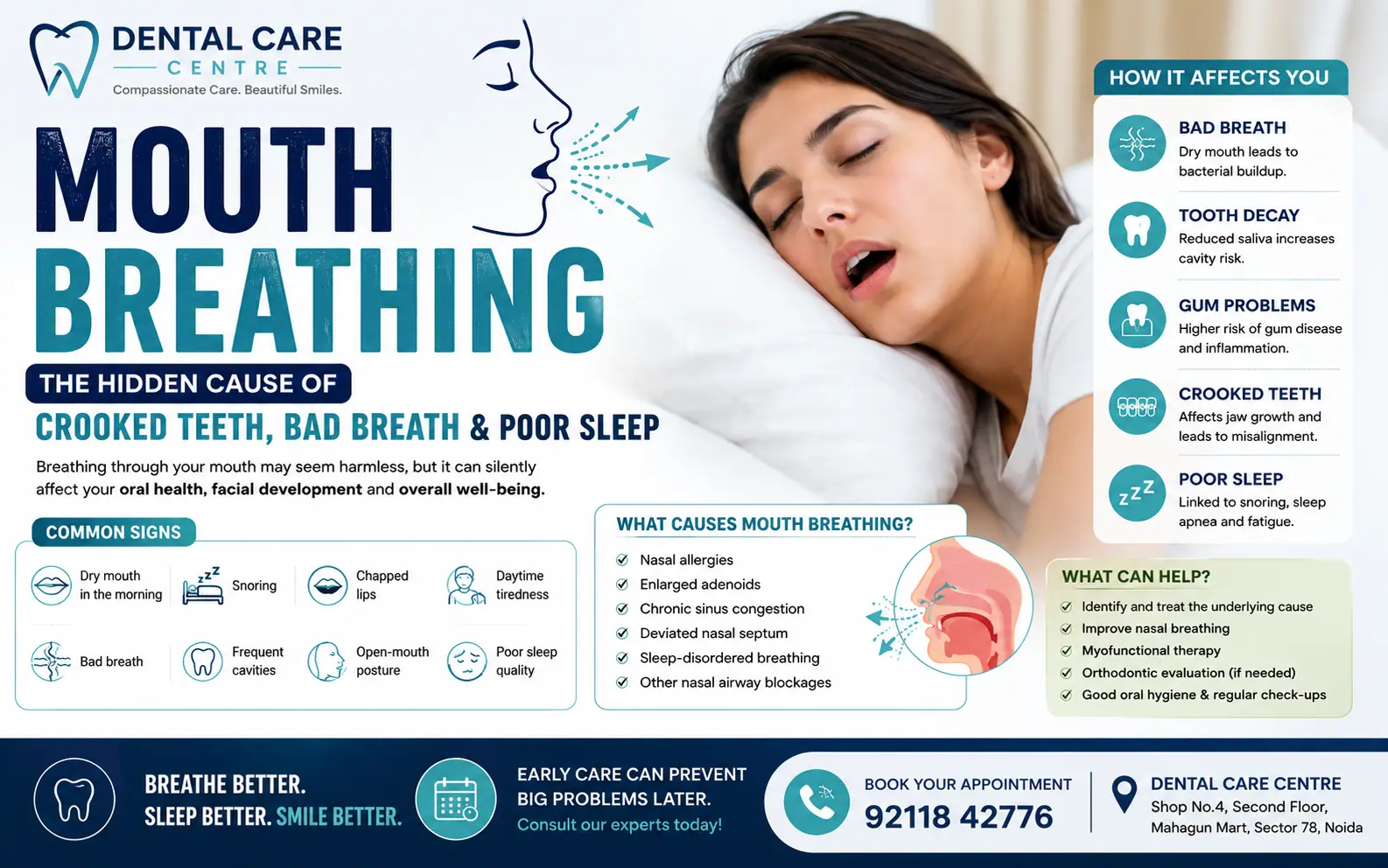
Mouth Breathing: The Hidden Cause of Crooked Teeth, Bad Breath & Poor Sleep
Mouth breathing can affect more than just your sleep. Learn how it contributes to bad breath, gum disease, crooked teeth, and facial development—and what you can do about it.

Invisible Aligners: Your Complete Patient Guide
Everything you need to know about invisible aligners — how they work, who qualifies, what treatment involves, costs, and how to choose the right clinic.