How to Prepare Your Child for Their First Dental Visit

Nervous about your child's first dental visit? Learn how to reduce child dental anxiety and set the stage for a lifetime of healthy smiles.
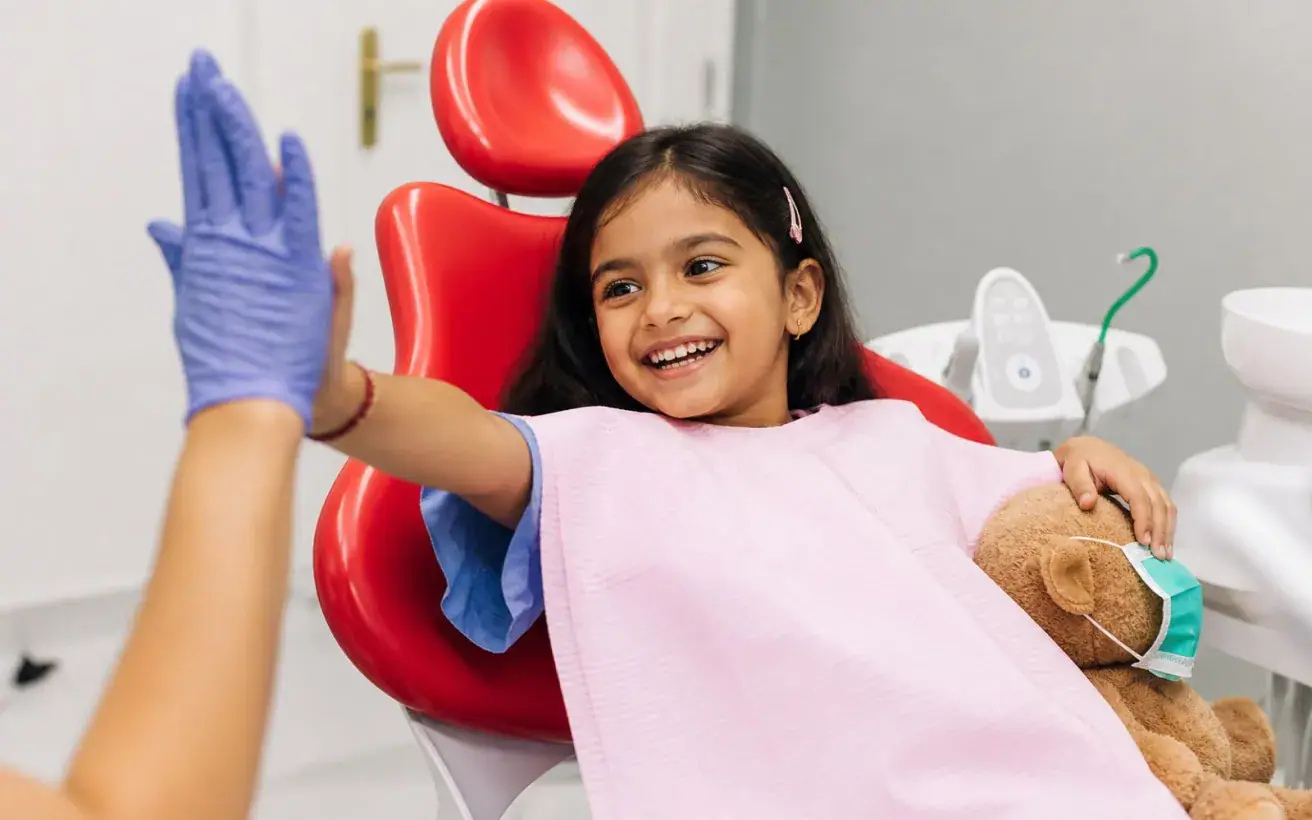
Why the first dental visit matters more than you think
The way a child experiences their first dental visit can shape their relationship with oral healthcare for decades. A calm, well-prepared introduction to the dental chair builds trust, reduces fear, and makes every future appointment significantly easier — for your child, for you, and for the clinical team treating them.
Most paediatric dental guidelines, including those issued by the Indian Academy of Paediatric Dentistry, recommend that a child's first dental check-up happen around their first birthday or within six months of the first tooth erupting — whichever comes first. In practice, many families wait until a visible problem appears, which can mean that the first encounter involves some degree of discomfort. Starting early, before any issues arise, removes that association entirely.
If you have already read Your Child's First Dental Visit — A Parent's Honest Guide, you will have a good sense of what to expect on the day itself. This post focuses specifically on the preparation work you can do at home in the days and weeks beforehand.
Understanding child dental anxiety
Child dental anxiety is not simply a matter of a child being difficult or uncooperative. It is a well-documented psychological response, often rooted in one of three sources: unfamiliar sensory input (sounds, smells, the dental light), anticipatory fear based on stories heard from adults or older siblings, or a previous negative experience in any medical or dental setting.
Our MDS team in paediatric dentistry reports that the majority of anxious young patients they see have never actually had a painful dental procedure — their anxiety is entirely anticipatory. This is important, because anticipatory anxiety is highly responsive to preparation.
Signs your child may be anxious
- Asking repeated questions about what will happen
- Refusing to discuss the appointment
- Complaints of stomach aches or headaches in the days before
- Tearfulness or irritability when the topic is raised
- Clinging behaviour or sleep disturbance
Recognising these signs early gives you time to address them rather than managing a full meltdown at the reception desk.
Practical steps to prepare your child at home
1. Start the conversation early — and keep it honest
Tell your child about the appointment several days in advance rather than the morning of. Use simple, age-appropriate language. Avoid phrases like "it won't hurt" — this introduces the concept of pain before it has been considered, and children are astute enough to wonder why you felt the need to mention it.
Instead, describe what will actually happen: "The dentist will count your teeth, look inside your mouth with a small mirror, and clean them gently. You will sit in a special chair that moves up and down."
Honesty builds credibility. If your child asks whether anything will happen that feels strange, acknowledge that some things might feel a bit unusual but that the dentist will explain everything before doing it.
2. Play "dentist" at home
Role play is one of the most effective tools available to parents preparing young children for medical appointments. Take turns being the dentist and the patient. Use a toothbrush or the back of a spoon as a pretend mirror. Count each other's teeth. Let your child practise opening wide, sitting still, and rinsing.
This does two things: it familiarises the child with the physical actions involved, and it puts them in a position of control — they are the dentist too, not just the patient.
3. Choose books and videos carefully
There are several well-regarded children's books about dental visits that portray the experience in a calm, matter-of-fact way. Look for ones that show a child protagonist who is nervous but manages the appointment successfully — this models the outcome you want your child to internalise.
Be cautious with online videos. Some parent-filmed content is excellent, but the algorithm can surface content that is dramatic or sensationalised. Preview anything before sitting down to watch it together.
4. Avoid using the dentist as a threat
Phrases such as "if you don't brush your teeth, the dentist will have to drill them" are well-intentioned but counterproductive. They frame the dentist as a consequence for bad behaviour rather than as a healthcare professional who is on the child's side. Our MDS specialists consistently cite this as one of the most common contributors to child dental anxiety in children who have never even had a filling.
5. Time the appointment well
Book the appointment at a time when your child is typically well-rested and cooperative — for most young children, this means mid-morning. Avoid scheduling just before or after nap time, during a known cranky period, or on a day when the child has other stressful activities.
6. Prepare yourself first
Children are highly sensitive to parental anxiety. If you have your own apprehension about dental visits — and many adults do, which is entirely understandable — try to resolve or at least manage it before the day. Speak to the dental team in advance if you have concerns. A brief phone call to the paediatric dentist to explain your child's temperament and any specific worries can allow the clinical team to adjust their approach accordingly.
What to expect on the day
A well-structured first dental visit for a young child typically follows a "tell-show-do" approach: the dentist explains what they are going to do, demonstrates it (often on a puppet or a model), and then does it. This is a clinically recognised behaviour management technique used by paediatric dental specialists worldwide.
The first visit is rarely about completing extensive treatment. It is primarily an opportunity for the child to meet the team, become comfortable in the environment, and allow the dentist to perform a brief examination. Think of it as an introductory appointment rather than a full clinical session.
Bring a comfort object if your child uses one. Most paediatric-friendly clinics will have no objection to a favourite toy sitting on the child's lap during the examination.
Local considerations for Noida patients
Families in Sector 78 and the surrounding areas of Noida are well-positioned when it comes to accessing paediatric dental care. The locality has seen significant growth in multi-speciality dental facilities that house dedicated paediatric departments staffed by MDS-qualified specialists — meaning your child's care is handled by someone with advanced post-graduate training in child behaviour and dental development, not a general practitioner seeing children as an aside to their adult patient load.
Traffic patterns in Noida mean that early morning appointments — typically between 9 a.m. and 11 a.m. on weekdays — are often the least stressful logistically. Arriving unhurried makes a meaningful difference to a child's state of mind at the start of an appointment. If you are travelling from areas such as Sector 137, Greater Noida West, or Indirapuram, factor in adequate travel time so that neither you nor your child arrives feeling rushed.
At Dental Care Centre in Sector 78, our multi-speciality approach means that if a clinical finding during your child's first visit suggests a need for a specialist's input — whether in orthodontics, paediatric dentistry, or preventive care — that referral can happen within the same facility. For parents who have questions about their own oral health arising from pregnancy or recent childbirth, our broader team also covers topics such as those discussed in Pregnancy and Dental Care: What's Safe to Do Now.
Frequently asked questions
At what age should my child have their first dental visit?
Clinical guidelines recommend the first visit at around twelve months of age or within six months of the first tooth appearing. Many parents are surprised by how early this is, but the rationale is sound: early visits establish a baseline, allow the dentist to identify any developmental concerns, and — crucially — normalise the dental environment before any problems arise.
My child is three and has never been to a dentist. Is it too late to start well?
It is never too late to establish a positive dental relationship. A three-year-old who has had no prior visits can still have an excellent first experience with the right preparation and a patient, experienced paediatric dentist. The preparation steps in this article apply at any age — adjust the language and role play to suit your child's developmental stage.
How do I find a paediatric dentist in Noida who specialises in anxious children?
When searching for a paediatric dentist Noida, look specifically for clinics that mention MDS (Master of Dental Surgery) qualifications in paediatric dentistry, and ask directly whether the dentist uses behaviour management techniques such as tell-show-do or nitrous oxide sedation for particularly anxious children. A brief phone consultation before booking can tell you a great deal about the practice's approach.
Should I stay in the room during the examination?
In most cases, yes — particularly for a first visit with a young child. Most paediatric dental specialists encourage a parent or carer to be present, at least initially. As the child becomes more comfortable over subsequent visits, the dentist may suggest the parent step slightly back to allow the child to develop their own independent relationship with the clinical team. Follow the dentist's lead, and communicate openly about what you and your child are comfortable with.
What if my child cries or refuses to open their mouth?
This is common and not a cause for alarm. Experienced paediatric dental teams have strategies for managing this, and a brief unproductive visit is not a failure — it is often part of the gradual process of building trust. Avoid expressing frustration or disappointment in front of your child after a difficult visit. Instead, acknowledge their bravery for coming and frame the next visit as another opportunity.
Can child dental anxiety carry over into adulthood?
It can, but it does not have to. Research in dental psychology consistently shows that children who have early positive dental experiences are significantly less likely to develop dental avoidance behaviours as adults. The reverse is also true, which is why the effort you put into preparation now is genuinely a long-term health investment for your child.
A note from our team
The information in this article is intended for general guidance only and does not substitute for a clinical assessment by a qualified dental professional. Every child is different, and the right approach for your child's first dental visit will depend on their individual temperament, developmental stage, and dental health. If you have specific concerns about child dental anxiety or your child's oral development, we warmly invite you to book a consultation with our paediatric dental team at Dental Care Centre, Sector 78, Noida — where we will take the time to understand your child's needs before the appointment even begins.
Free 15-minute consultation. We'll review your specific case and walk you through your options — no pressure, no upselling.
Treatments mentioned in this article
More from the Blog
All 23 articles →
Why Regular Dental Check-ups Are Essential for a Healthy Smile
Regular dental check-ups help prevent cavities, gum disease, and costly treatments. Learn why visiting your dentist every six months matters.
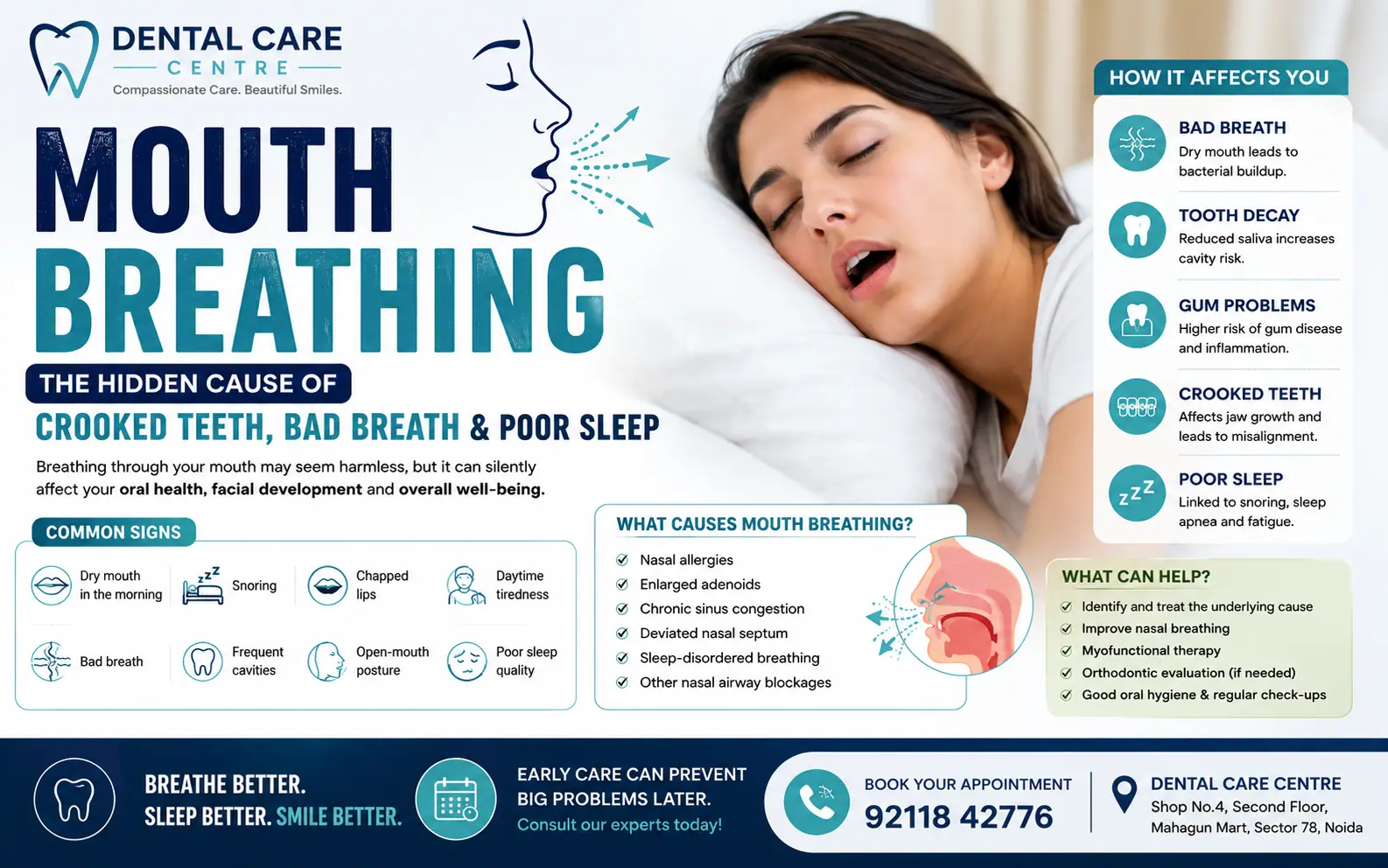
Mouth Breathing: The Hidden Cause of Crooked Teeth, Bad Breath & Poor Sleep
Mouth breathing can affect more than just your sleep. Learn how it contributes to bad breath, gum disease, crooked teeth, and facial development—and what you can do about it.

Invisible Aligners: Your Complete Patient Guide
Everything you need to know about invisible aligners — how they work, who qualifies, what treatment involves, costs, and how to choose the right clinic.