Invisible Aligners: Your Complete Patient Guide

Everything you need to know about invisible aligners — how they work, who qualifies, what treatment involves, costs, and how to choose the right clinic.
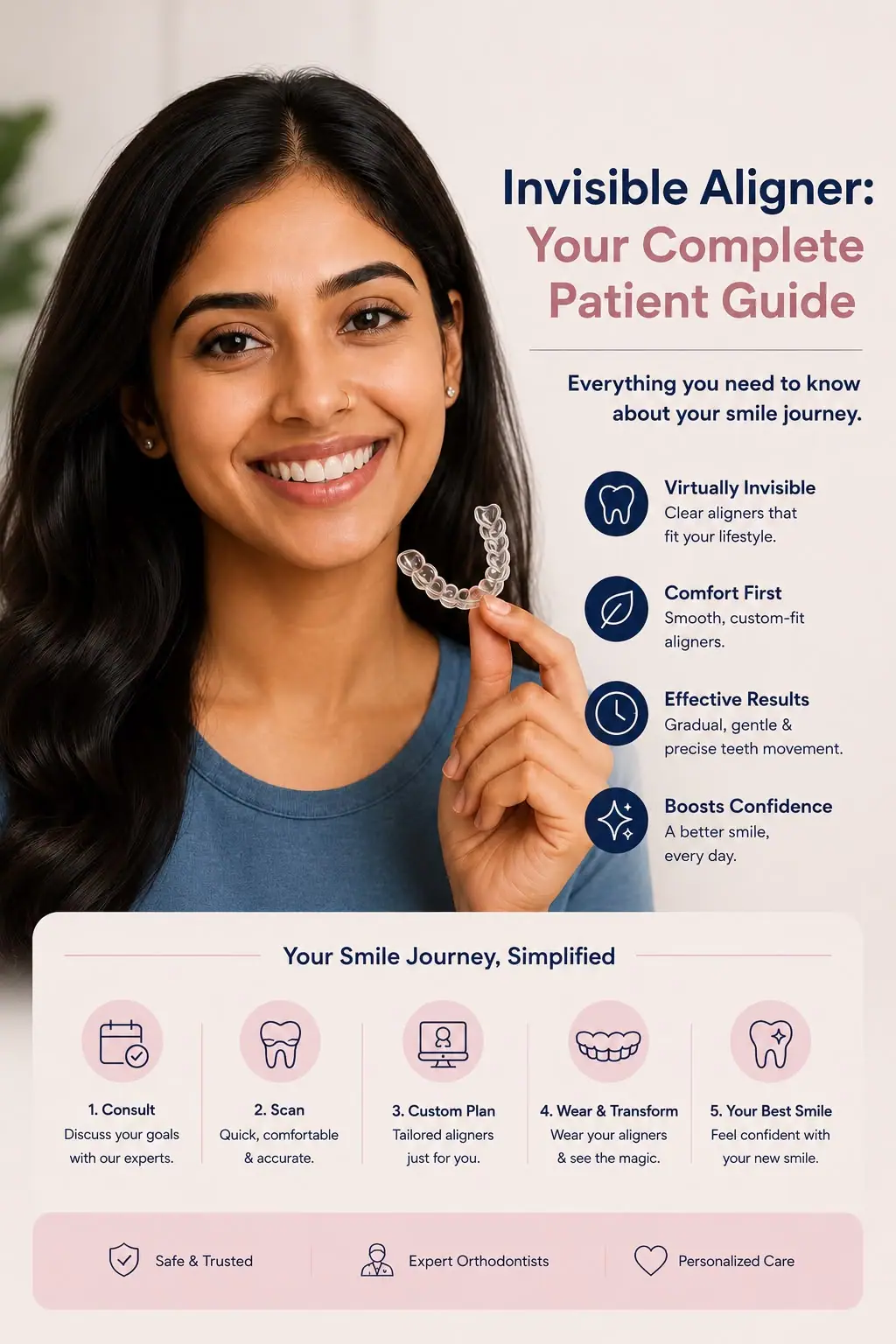
What are invisible aligners?
Invisible aligners are a series of custom-made, clear plastic trays that gradually shift your teeth into alignment — and the question almost every patient asks first is: will people actually be able to see them? In short, they are far less noticeable than fixed metal braces, though not entirely invisible under close inspection.
Each tray is worn for roughly one to two weeks before you move on to the next in the series. Over time, the cumulative effect of small, controlled forces moves teeth into the positions planned by your orthodontist. The trays are removable, which means you eat and clean your teeth as normal — a significant practical advantage over traditional appliances.
Who is a good candidate?
Invisible aligners work well for a wide range of orthodontic concerns, but they are not universally suitable. A thorough clinical assessment — including digital X-rays and, in many cases, a 3D scan — is essential before any treatment plan is drawn up.
Conditions aligners typically address well:
- Mild to moderate crowding
- Spacing and gaps between teeth
- Mild overbite, underbite, or crossbite
- Relapse after previous orthodontic treatment
Cases where aligners may be less appropriate:
- Severe skeletal discrepancies (jaw-level problems)
- Significant vertical bite issues
- Patients who cannot commit to wearing trays for 20–22 hours per day
- Certain complex rotations of teeth with limited surface area for attachments
Age is rarely a barrier for adults. Teenagers can also use aligners, though compliance is a stronger factor to weigh at that stage.
Treatment options and brands
The invisible aligners guide for any patient should acknowledge that not all clear aligner systems are equivalent. Several brands are available in India, ranging from internationally established names to domestically manufactured alternatives.
Common systems you will encounter:
- Invisalign — the most extensively researched brand globally, with a large database of clinical outcomes
- Angel Aligner, Toothsi, makeO — Indian or Asia-Pacific systems that are typically more affordable
- In-house / lab-fabricated aligners — produced locally by dental laboratories; quality depends heavily on the clinic's fabrication partner and clinical oversight
If you are weighing up aligners against fixed braces, our detailed post on Invisalign vs braces for adults covers that comparison in depth, including which clinical situations favour each approach.
Your treating orthodontist's skill and experience matters as much as the brand. A well-executed treatment plan with a mid-range system will generally outperform a poorly planned one with a premium brand.
What to expect: the treatment journey
Initial consultation and records
The process begins with a comprehensive examination. Your dentist or orthodontist will take photographs, digital X-rays, and typically a 3D intraoral scan. These records feed into the treatment planning software, which generates a virtual simulation of your expected tooth movements — you can often see a projected end result before any tray is made.
Treatment planning review
Before fabrication begins, your clinician should walk you through the planned movements, the number of trays in your series, and any attachments (small tooth-coloured bumps bonded to teeth to help the trays grip and rotate specific teeth). Ask questions at this stage — understanding the plan improves compliance.
Fitting your first trays
Once the trays arrive, your clinician fits the first set, places any attachments, and may perform minor interproximal reduction (gentle reshaping between teeth to create space). Initial tightness or mild soreness for 24–48 hours after each new tray is normal and typically settles quickly.
Progress reviews
Clinical check-ups are scheduled every six to eight weeks in most cases. Your clinician assesses whether teeth are tracking as planned. If not, refinements — an additional series of trays — can be ordered.
Retention
Once active treatment concludes, retention is non-negotiable. Teeth have a natural tendency to drift back towards their original positions. Most patients receive clear retainers (similar in appearance to aligners) to be worn nightly, often indefinitely. Skipping retention is the most common reason patients need re-treatment.
Duration of treatment
Treatment length varies considerably based on complexity:
- Minor corrections: 3–6 months
- Moderate cases: 12–18 months
- Complex cases: 18–24+ months
Our MDS orthodontic team notes that the most reliable predictor of staying on schedule is consistent wear time. Every hour the trays are out of your mouth is an hour they are not working.
Cost overview
Invisible aligners cost more than conventional metal braces in most clinical settings. In India, fees vary based on the brand chosen, case complexity, the number of refinement rounds included, and the experience level of the treating clinician.
- Entry-level / Indian-brand systems: Typically starting in the range of ₹50,000–₹80,000 for straightforward cases
- Premium international systems (e.g., Invisalign): Typically ₹1,20,000–₹3,00,000 or more for comprehensive treatment
These figures are indicative only; your final fee should be quoted in writing after a proper clinical assessment. Always confirm what is included — records, attachments, retainers, and refinements should ideally be itemised or bundled clearly.
Risks and limitations
No treatment is without risk. Being aware of these before you begin allows you to have an informed conversation with your clinician.
- Root resorption: Minor shortening of tooth roots can occur with any orthodontic treatment; severe resorption is uncommon but worth monitoring via periodic X-rays
- Gum health: Aligners trap plaque if oral hygiene lapses; maintaining a rigorous dental hygiene routine throughout treatment is essential
- Temporary sensitivity: Tooth sensitivity can increase during active movement phases
- Non-compliance: Removing trays too frequently is the single biggest cause of extended treatment times and poor outcomes
- Attachment debonding: Small attachments can come loose and need re-bonding
- Relapse: Without consistent retainer wear after treatment, teeth will shift
If you experience unusual or persistent sensitivity during treatment, read our overview of why teeth become sensitive for context — though always report ongoing discomfort to your treating clinician promptly.
Choosing a clinic for invisible aligners in Noida
Not every dental practice offering invisible aligners in Noida has an in-house orthodontic specialist. For straightforward cases, a general dentist trained and certified in aligner therapy may be entirely adequate. For moderate to complex cases, treatment supervised or delivered by an MDS-qualified orthodontist is strongly advisable.
Questions worth asking any clinic:
- Is there an MDS orthodontist on the team, or will a general dentist manage my case?
- Which aligner system do you use, and why?
- Are refinements included in the quoted fee?
- What retention protocol do you follow after active treatment?
- Can I see before-and-after records of comparable cases you have treated?
A multi-speciality approach matters if your case involves anything beyond straightforward tooth alignment — for example, if gum health, missing teeth, or cosmetic work such as veneers or crowns are also part of your broader smile goals. Having orthodontic, periodontic, and restorative specialists communicating under one roof reduces the risk of plans that work in isolation but conflict with one another.
Local considerations for Noida patients
For residents searching for invisible aligners Noida, geography and accessibility matter alongside clinical quality. Aligner treatment requires consistent follow-up appointments every six to eight weeks for a period of one to two years in most cases — a clinic that is inconvenient to reach regularly will make compliance harder.
Dental Care Centre in Sector 78, Noida, offers invisible aligner treatment with MDS specialist oversight as part of a multi-speciality setup. The clinic uses digital scanning for treatment planning, which eliminates the need for traditional impressions in most cases and allows patients to visualise projected outcomes before committing to treatment.
Noida's urban air quality and dietary habits — including frequent consumption of sugary beverages and chai — mean that patients here should be particularly diligent about cleaning trays and teeth after meals. Staining of trays, while cosmetically temporary, can be a signal that cleaning habits need attention. Your clinician can advise on appropriate cleaning solutions for your specific tray material.
Frequently asked questions
Are invisible aligners suitable for teenagers?
Aligner treatment can work well for teenagers, but compliance is a more significant factor than for adults. Some systems include compliance indicators — small blue dots on the tray that fade with wear time — to help parents and clinicians monitor usage. Adolescents who are motivated and understand the commitment tend to do well; those who may frequently remove trays for social reasons are often better served by fixed appliances.
Will aligners affect my speech?
Most patients notice a mild lisp during the first few days of wearing new trays. This typically resolves within a week as the tongue adapts. Patients who speak professionally report that reading aloud for 15–20 minutes each day during the first few days helps accelerate adaptation.
Can I drink coffee or tea with my aligners in?
No — hot or coloured beverages should not be consumed while wearing trays. Heat can warp the plastic and alter the fit; pigmented liquids stain the material. Remove trays before any beverage other than plain water, rinse your mouth before reinserting, and factor this into your daily routine from the outset.
How do I clean my aligners?
Rinse trays with cool water each time you remove them. Clean them gently with a soft toothbrush and a small amount of clear, unscented soap — not toothpaste, which can scratch the surface and create areas where bacteria accumulate. Proprietary aligner cleaning tablets are also effective for a deeper clean. Avoid leaving trays exposed to open air for extended periods, as this encourages bacterial growth.
What happens if I lose or damage a tray?
Contact your clinic promptly. In most cases, your clinician will advise you to move on to the next tray in the series or step back to the previous one, depending on where you are in the sequence. Replacement trays can typically be ordered but will add cost and time. Keeping trays in their case when not in your mouth significantly reduces the risk of loss or accidental damage.
Do aligners work as well as traditional braces?
For the case types they are designed to address, well-planned aligner treatment produces outcomes clinically comparable to fixed appliances. The key phrase is well-planned — outcome quality is strongly tied to the accuracy of the initial plan, the use of attachments where needed, and patient compliance. For complex skeletal or severe rotational issues, fixed appliances or combined surgical-orthodontic approaches remain the standard of care.
A note from our team
This guide is intended for general information purposes only and does not constitute clinical advice. Every patient's dental anatomy, bite, and health history is different, and treatment suitability can only be determined after an in-person examination by a qualified dental professional. If you are considering invisible aligners and would like an honest assessment of whether they are right for your specific situation, we welcome you to book a consultation at Dental Care Centre — no obligation, just a straightforward clinical conversation.
Free 15-minute consultation. We'll review your specific case and walk you through your options — no pressure, no upselling.
Treatments mentioned in this article
More from the Blog
All 23 articles →
Why Regular Dental Check-ups Are Essential for a Healthy Smile
Regular dental check-ups help prevent cavities, gum disease, and costly treatments. Learn why visiting your dentist every six months matters.
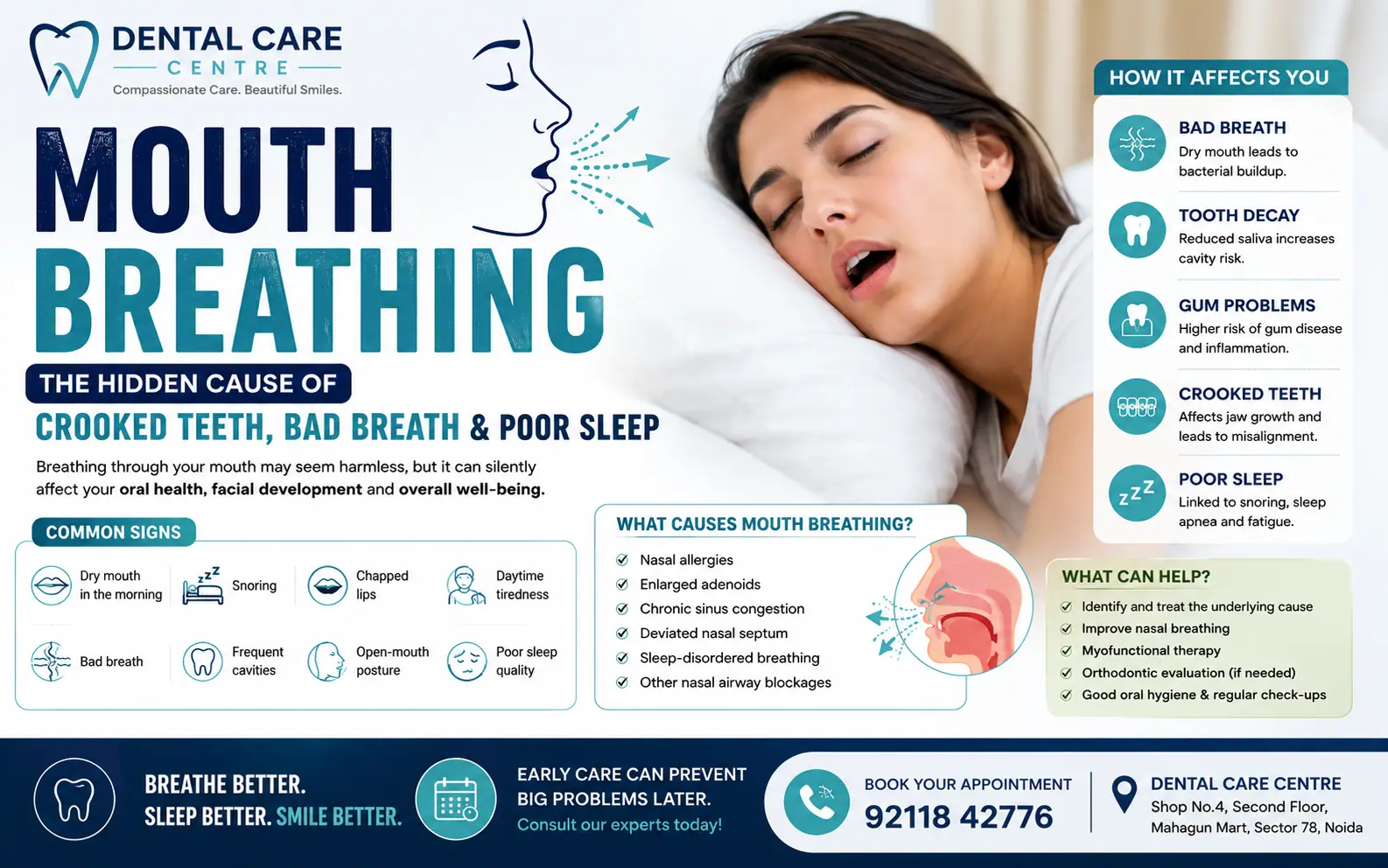
Mouth Breathing: The Hidden Cause of Crooked Teeth, Bad Breath & Poor Sleep
Mouth breathing can affect more than just your sleep. Learn how it contributes to bad breath, gum disease, crooked teeth, and facial development—and what you can do about it.
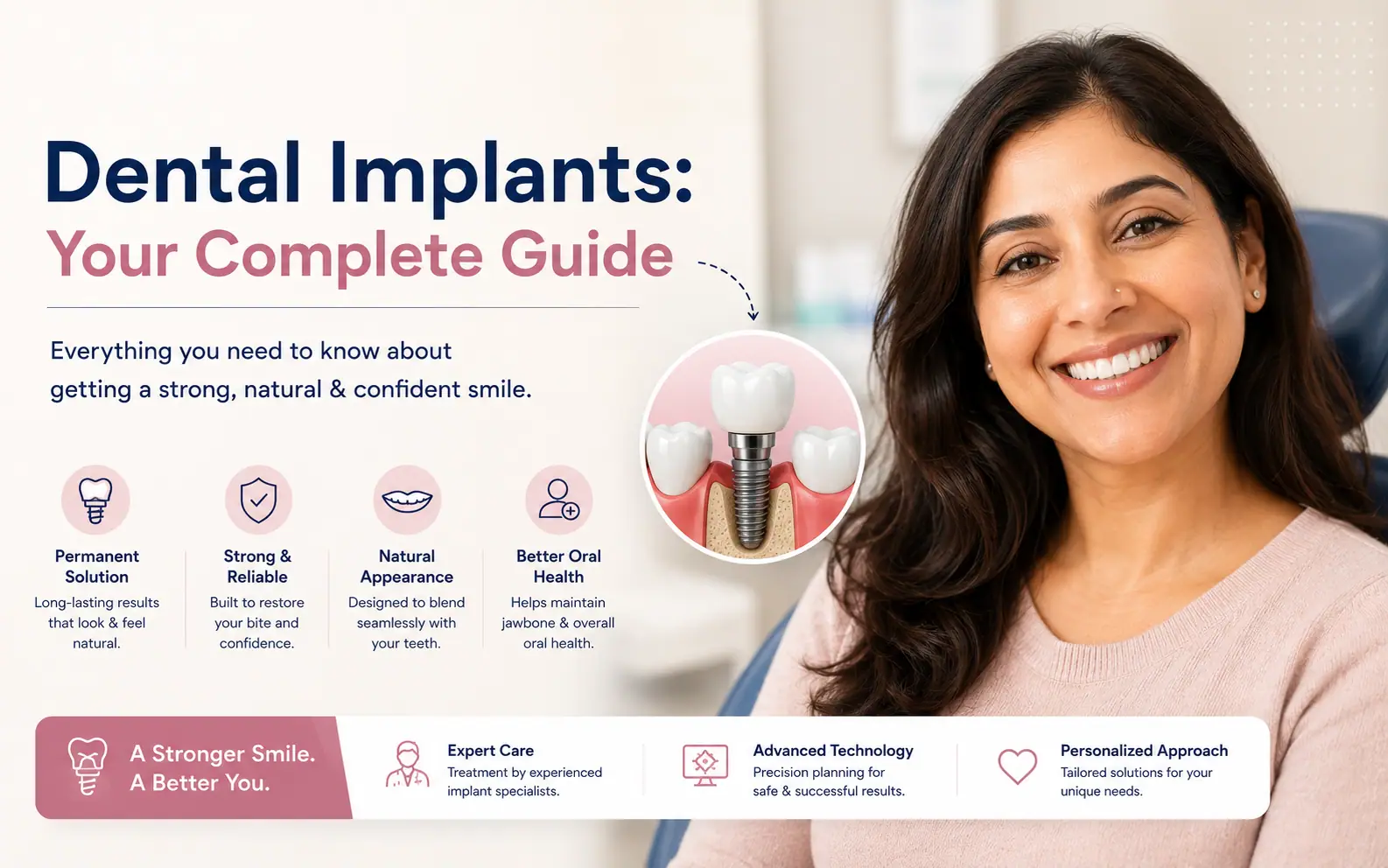
Dental Implants: Your Complete Patient Guide (2026)
Everything you need to know about dental implants — from candidacy and procedure steps to recovery, costs, and choosing the right clinic in Noida.